Master the Security Jobseeker Onboarding Process Easily

Landing a british security job starts long before the interview room. In the UK, every applicant must provide a valid SIA licence and proof of right to work, while over 90 percent of security employers say detailed credentials set serious candidates apart. Understanding these expectations can mean the difference between a missed chance and a solid job offer. This guide offers clear, step by step support so you know what paperwork, skills, and profile details recruiters will check from the very first stage.
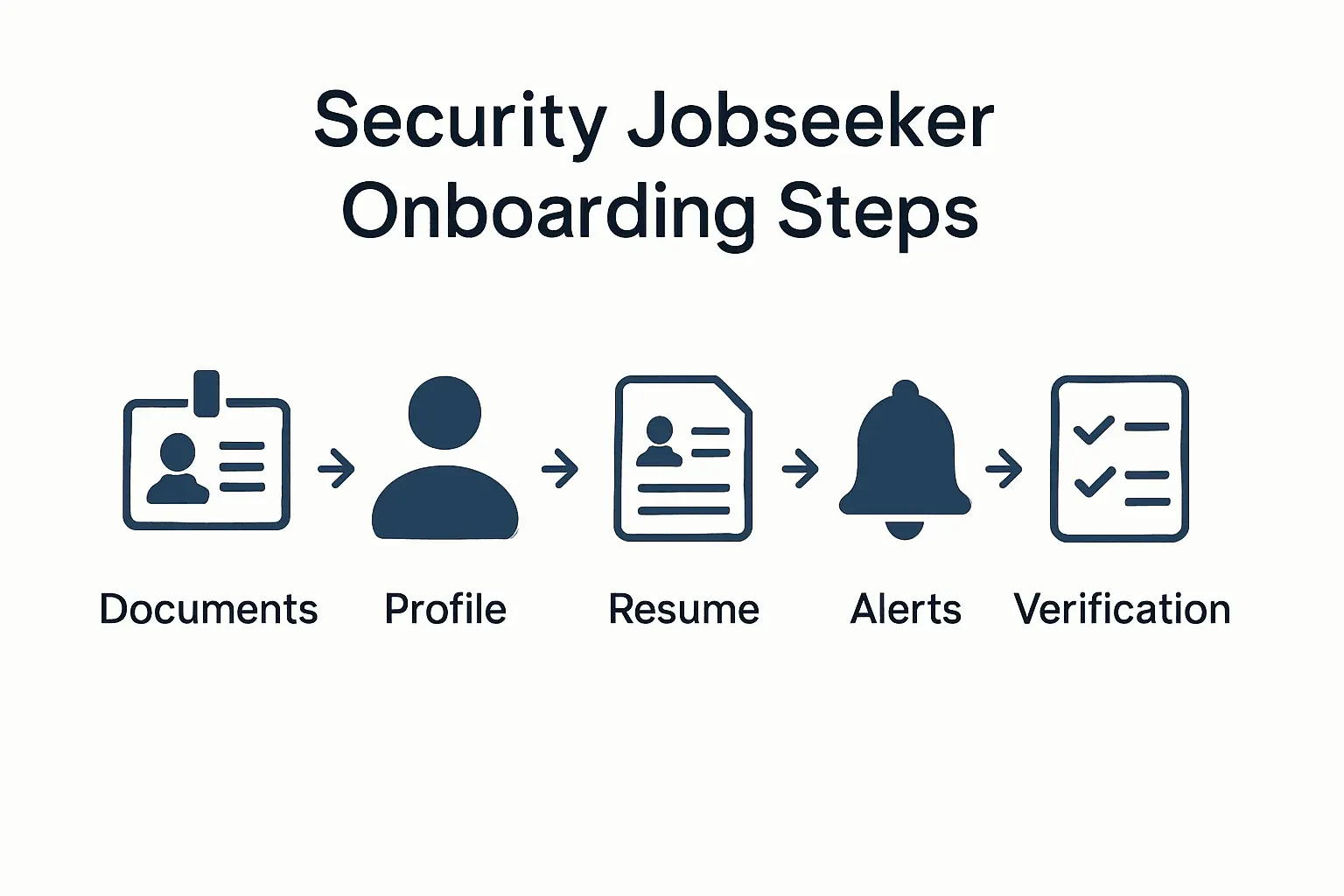
Table of Contents
- Stage 1: Prepare Essential Documents And Qualifications
- Stage 2: Create And Customise Your Profile Accurately
- Stage 3: Upload And Optimise Your CV For Visibility
- Stage 4: Set Job Alerts And Preferences Effectively
- Stage 5: Verify Your Application Readiness And Details
Key Takeaways
| Essential Insight | Explanation |
|---|---|
| 1. Obtain a valid SIA licence | A crucial requirement for working legally in the security sector in the UK is having a front-line SIA licence appropriate to your job type. |
| 2. Compile necessary application documents | Prepare a complete set of documents, including your CV, professional qualifications, and any relevant training certificates to strengthen your application. |
| 3. Develop a targeted CV | Tailor your CV specifically for security roles, emphasising your qualifications, experience, and skills while ensuring it’s well-structured and visually appealing. |
| 4. Set customised job alerts | Configure job alerts that accurately reflect your preferences for security roles, locations, and employment types to streamline your job search. |
| 5. Verify application details rigorously | Ensure all application materials are accurate and complete, including validating qualifications and personal information to meet pre-employment checks. |
Stage 1: Prepare essential documents and qualifications
Successfully navigating your security job application requires meticulous preparation of documents and professional credentials. Your goal is to present a comprehensive professional profile that demonstrates your readiness for security sector roles.
According to National Careers, working legally as a security professional in the UK demands obtaining a front-line Security Industry Authority (SIA) licence. This critical document requires completing an approved licence linked qualification specific to your intended security work type, whether cash and valuables guarding, CCTV operation, or front-line security responsibilities. Gather all necessary training certificates, professional qualifications, and evidence of completed courses before beginning your job application process.
For comprehensive documentation, compile the following key items:
- Valid SIA licence
- Professional qualifications
- Training certificates
- Educational credentials
- Proof of right to work in the UK
- Up to date CV highlighting security experience
- Professional references
Remember that Home Office pre-employment checks involve thorough document verification. Ensuring your paperwork is accurate, complete, and professionally presented will significantly enhance your job application prospects. Double check all documentation for currency and authenticity before submission.
Your next step involves crafting a targeted security sector CV that showcases these qualifications effectively.
Stage 2: Create and customise your profile accurately
Building a compelling online profile is your gateway to securing exciting security sector opportunities. Your digital representation needs to be professional, comprehensive, and strategically crafted to attract potential employers.
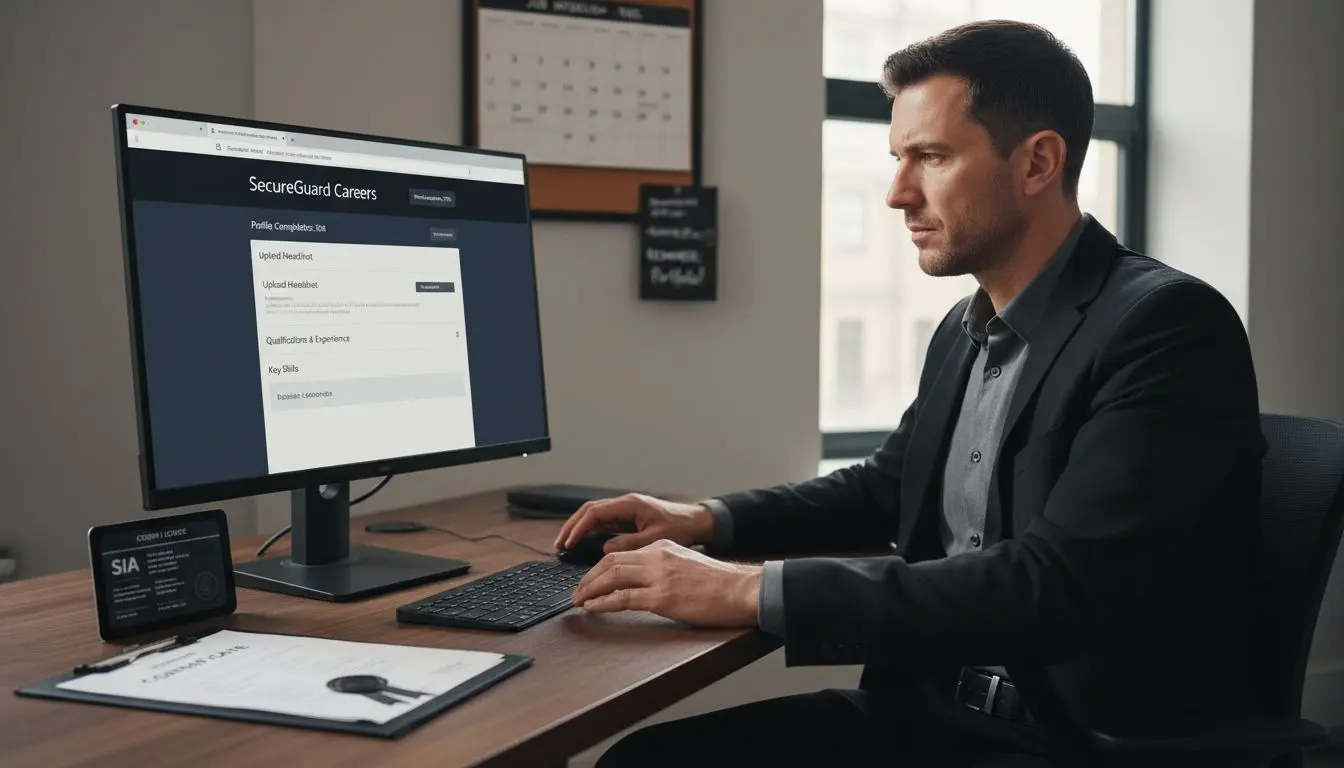
When creating your profile on Security Job Search Workflow, focus on presenting a clear and detailed professional narrative. Start by uploading a professional headshot that reflects security sector standards clean, neutral background, formal attire. Ensure your profile includes a comprehensive work history highlighting your security experience, qualifications, and key achievements.
Key profile customisation elements include:
- Professional profile photograph
- Detailed work experience section
- Specific security sector skills
- List of professional certifications
- Language proficiencies
- Contact information
- Privacy settings configuration
Pay special attention to your written descriptions. Use clear, concise language that demonstrates your expertise, reliability, and professional approach. Avoid generic statements and instead provide specific examples of your security experience, technical skills, and professional capabilities. Remember that employers will use your profile to quickly assess your suitability for security roles.
The next crucial step involves preparing your application documents to complement your newly created professional profile.
Stage 3: Upload and optimise your CV for visibility
Transforming your CV from a standard document to a compelling security sector profile requires strategic preparation and targeted presentation. Your goal is to create a document that immediately captures employers’ attention and highlights your professional capabilities.
When preparing your CV, draw insights from our understanding of CV importance in security job searches. Focus on crafting a clear, concise narrative that showcases your security expertise, professional certifications, and relevant experience. Structure your document with precision professional layout, clean formatting, and strategic keyword placement that aligns with security sector job descriptions.
Key CV optimisation strategies include:
- Highlight security specific qualifications
- Use industry specific terminology
- Quantify professional achievements
- Include relevant training and certifications
- Demonstrate technical and soft skills
- Tailor content to specific security roles
- Proofread for absolute accuracy
Pay meticulous attention to document formatting. Use a professional font, maintain consistent spacing, and ensure your document is easily scannable. Include a strong professional summary that encapsulates your security sector expertise in no more than three sentences. Remember that recruitment managers often spend less than 30 seconds reviewing initial CVs make every word count.
Your next critical step involves preparing for potential interviews by researching potential employers and anticipating common security sector interview questions.
Stage 4: Set job alerts and preferences effectively
Configuring precise job alerts is your strategic approach to discovering the most suitable security sector opportunities. By carefully tailoring your preferences, you can streamline your job search and ensure you receive the most relevant notifications.
According to National Careers, understanding different career pathways is crucial when setting job alerts. For instance, consider specifying preferences for roles like Professional Security Operative Level 2 Intermediate Apprenticeship or specific security specialisations that align with your professional goals and qualifications.
Key configuration strategies for job alerts include:
- Select specific security sector roles
- Define precise geographical preferences
- Set salary range expectations
- Choose preferred employment types
- Filter by required qualifications
- Specify shift patterns
- Select desired security certifications
Take time to review and refine your alert settings periodically. Most platforms allow granular customisation, enabling you to receive notifications that precisely match your career aspirations. Be strategic select alerts that challenge and excite you while remaining realistic about your current skill set and experience level.
Your next step involves actively monitoring and responding to the job alerts you have carefully configured.
Stage 5: Verify your application readiness and details
Preparing for a successful security sector job application requires meticulous attention to detail and comprehensive document verification. Your goal is to present a flawless application that demonstrates your professionalism and commitment to the security industry.
According to Home Office Careers, pre-employment checks are critical. Carefully review your residency requirements for different security clearance levels: three years for Counter Terrorist Check (CTC), five years for Security Check (SC), and ten years for Developed Vetting (DV). If you have any uncertainties about your residency status, proactively consult the recruiting manager for personalised guidance.
Key application verification steps include:
- Confirm all personal details are accurate
- Validate professional qualifications
- Check identification documents
- Review work history for completeness
- Ensure first aid certifications are current
- Verify legal work permissions
- Cross reference references
According to Kingdom Security, your application must include a certified photograph and comprehensive proof of UK citizenship or legal work permission. Anticipate a thorough background check that will examine your entire professional and personal history.
Your next step involves preparing for potential interviews by researching potential employers and understanding their specific security sector requirements.
Simplify Your Security Job Application Journey Today
The article highlights key challenges security jobseekers face such as managing essential documents like the SIA licence, crafting tailored CVs, and setting effective job alerts. These steps can often feel overwhelming but are crucial to stand out in a competitive market. You want to ensure your profile is professional, your paperwork is impeccable, and your job search is targeted and timely.
At Security Jobs Board, we understand these challenges and offer a streamlined, user-friendly platform designed specifically for security professionals in the UK. Easily create your customised profile, upload your CV with professional formatting, and set precise job alerts so you never miss a relevant opportunity. Our site is built to enhance your visibility to employers and fast-track your application process.

Take control of your security career progression by joining Security Jobs Board now. Experience seamless access to trusted UK security vacancies, benefit from expert guidance, and ensure you present your qualifications effectively from the very start. Don’t delay securing your ideal role because your professional future deserves the best platform to shine. Visit https://www.securityjobsboard.co.uk/ and start your journey today.
Frequently Asked Questions
What documents do I need to prepare for my security job application?
To apply for a security role, you need to prepare key documents such as a valid SIA licence, professional qualifications, training certificates, and proof of your right to work. Gather all these items before starting your job application to ensure a complete submission.
How can I create a compelling online profile for security job applications?
To build a strong online profile, upload a professional headshot and provide detailed descriptions of your work experience and relevant skills. Make sure to use industry-specific terms and highlight any certifications to make your profile stand out to potential employers.
What strategies should I use to optimise my CV for security jobs?
Focus on tailoring your CV by highlighting security-specific qualifications, quantifying achievements, and using industry terminology. Maintain a clean and professional format while including a strong summary of your expertise to capture recruiters’ attention quickly.
How do I set effective job alerts for security roles?
Configure job alerts by specifying security sector roles, geographical preferences, and desired salary ranges. Regularly review and refine your settings to ensure you are receiving notifications for the most relevant opportunities that align with your career goals.
What should I verify before submitting my security job application?
Before submitting your application, confirm all personal details are accurate, validate your qualifications, and ensure all identification documents are current. Take the time to review your work history and references for completeness to avoid any potential issues.
How do I prepare for a security job interview?
To prepare for your security job interview, research the company and understand their specific requirements for the role. Anticipate common interview questions related to the security industry and practice your responses to demonstrate your knowledge and confidence.


