What Is GDPR and Why It Matters for UK Security

Every British security professional knows the pressure that comes with handling sensitive data across workplaces. Understanding the General Data Protection Regulation and its key principles is more than a legal necessity—it is a daily requirement in protecting individual privacy and organisational trust. This overview highlights core concepts and responsibilities under UK GDPR, equipping you to safeguard personal information, demonstrate compliance, and strengthen your job applications through robust data protection practices.
Table of Contents
- GDPR Definition And Key Concepts
- Core Data Protection Principles In The UK
- Legal Framework And Recent Reforms
- Individual Rights And Organisational Duties
- Risks, Liabilities, And Common Pitfalls
- GDPR Compliance In UK Security Roles
Key Takeaways
| Point | Details |
|---|---|
| GDPR Framework | The General Data Protection Regulation empowers individuals by giving them control over their personal data, applicable to all organisations regardless of size or sector. |
| Core Principles | Organisations must adhere to seven core data protection principles, ensuring lawful and transparent handling of personal information while maintaining accountability. |
| Legal Responsibilities | UK organisations must comply with stringent data protection standards, with severe penalties for violations underscoring the importance of proactive compliance measures. |
| Individual Rights | Citizens have robust rights under GDPR, necessitating organisations to develop clear processes for managing data subject requests effectively. |
GDPR Definition and Key Concepts
The General Data Protection Regulation (GDPR) represents a critical legal framework governing personal data protection across the United Kingdom. UK data protection legislation fundamentally transformed how organisations handle, process, and secure individual personal information.
At its core, GDPR establishes comprehensive rules designed to give individuals greater control over their personal data. The regulation applies to any organisation processing personal information, regardless of its size or sector. Key principles include:
- Ensuring data is collected fairly and transparently
- Limiting data collection to specific, explicit purposes
- Minimising the amount of personal information gathered
- Maintaining accurate and up-to-date records
- Protecting data through robust security measures
- Restricting data retention periods
The legal framework emerged from European Union regulations but was adopted into UK domestic law following Brexit. This means UK organisations must still comply with stringent data protection standards, even after leaving the European Union.

Organisations found in violation of GDPR can face significant financial penalties, with potential fines reaching up to £17.5 million or 4% of global annual turnover. These substantial consequences underscore the regulation’s importance in protecting individual privacy rights.
Pro tip: Regularly audit your data processing practices to ensure ongoing GDPR compliance and minimise potential legal risks.
Core Data Protection Principles in the UK
The United Kingdom’s data protection framework is built upon seven fundamental core principles that guide organisations in handling personal information responsibly. Data protection principles establish a comprehensive approach to managing and securing individual data across various sectors.
These core principles are designed to ensure that organisations treat personal information with the utmost respect and diligence. Key principles include:
- Lawfulness, Fairness, and Transparency: Ensuring data processing is legal, fair, and clearly communicated
- Purpose Limitation: Collecting data only for specific, explicit, and legitimate purposes
- Data Minimisation: Gathering only the essential information required
- Accuracy: Maintaining precise and up-to-date personal records
- Storage Limitation: Retaining data only for necessary time periods
- Integrity and Confidentiality: Protecting data through robust security measures
- Accountability: Demonstrating compliance and responsibility in data management
Moreover, these principles are not merely theoretical guidelines but have significant practical implications. UK data protection regulations require organisations to implement comprehensive strategies that protect individual privacy rights while maintaining effective data processing capabilities.
Organisations must go beyond simple compliance, actively embedding these principles into their operational frameworks. This means developing clear data management policies, training staff, conducting regular audits, and maintaining transparent documentation of all data processing activities.
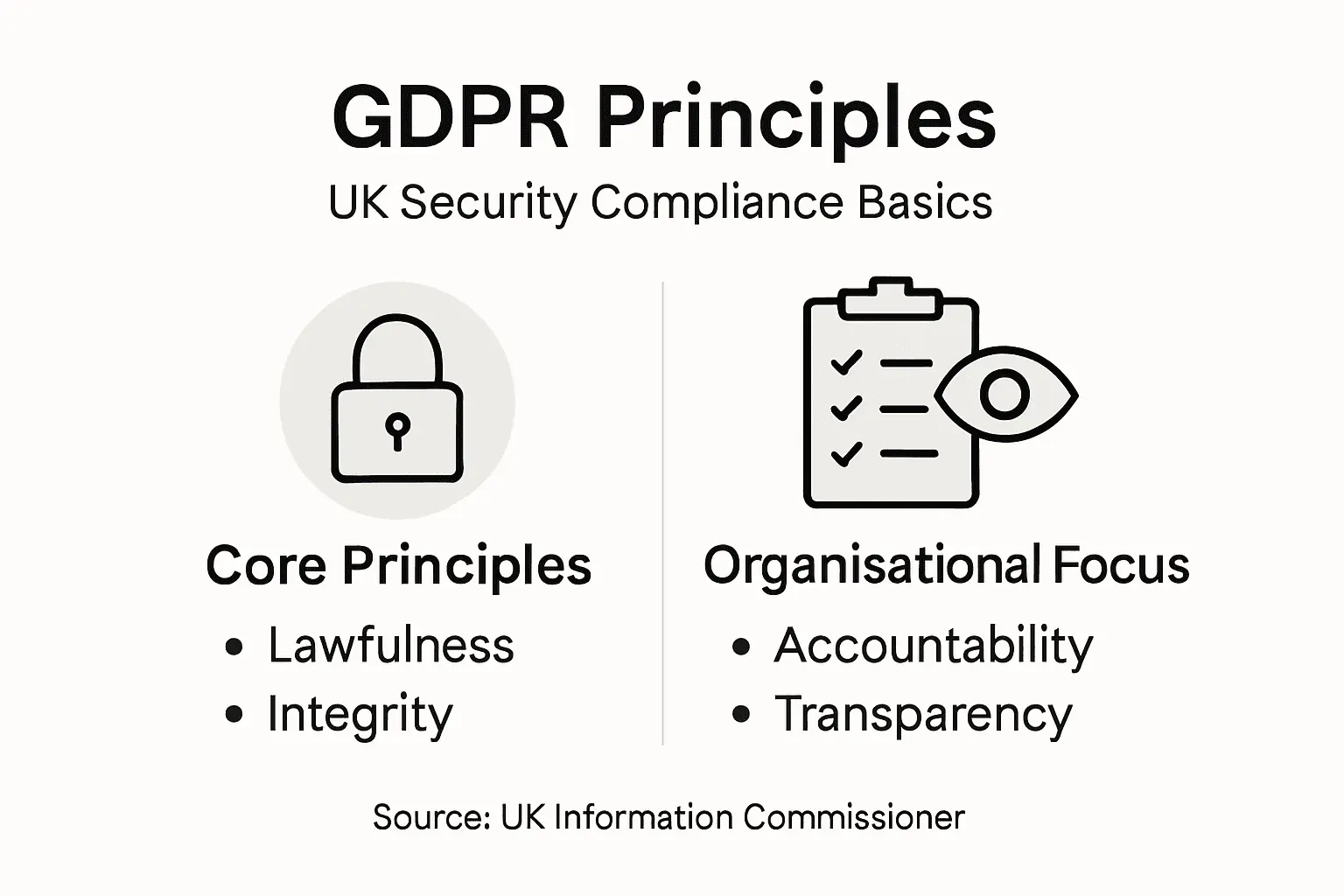
Here’s a quick reference of core GDPR principles and their practical impact:
| Principle | Practical Interpretation | Impact on Organisation |
|---|---|---|
| Lawfulness, Fairness, Transparency | Clear consent and communication | Builds trust with customers |
| Purpose Limitation | Defined objectives for data use | Prevents misuse of information |
| Data Minimisation | Only necessary data is collected | Reduces storage and liability |
| Accuracy | Regular updates to records | Ensures data reliability |
| Storage Limitation | Set retention policies | Limits exposure to breaches |
| Integrity & Confidentiality | Advanced security measures | Protects against unauthorised access |
| Accountability | Documented compliance practices | Facilitates regulatory audits |
Pro tip: Conduct regular internal audits to ensure your organisation consistently meets all seven core data protection principles and maintains robust privacy practices.
Legal Framework and Recent Reforms
The United Kingdom’s data protection legal landscape has undergone significant transformations since Brexit, creating a unique regulatory environment that balances individual privacy rights with technological innovation. Data protection reforms demonstrate the UK’s commitment to maintaining robust data protection standards while adapting to emerging digital challenges.
Key developments in the legal framework include:
- Adoption of the UK GDPR post-Brexit
- Continued alignment with core European data protection principles
- Introduction of the Data (Use and Access) Act 2025
- Enhanced digital verification services
- Simplified compliance requirements for organisations
- Improved support for law enforcement data management
- Strengthened safeguards for personal information
Post-Brexit data regulations have created a nuanced legal landscape where the UK maintains its own version of GDPR while preserving critical data transfer arrangements with the European Union. This approach ensures that British organisations can continue to operate effectively in international data ecosystems while protecting individual privacy rights.
The evolving legal framework reflects a sophisticated approach to data protection, balancing technological innovation with stringent privacy safeguards. Organisations must remain agile, continuously updating their data management strategies to comply with these dynamic regulatory requirements and protect both individual rights and organisational interests.
To illustrate recent GDPR-related legal reforms, see this summary table:
| Legal Development | Year Implemented | Main Effect on Organisations |
|---|---|---|
| UK GDPR Adoption | 2020 | Maintains GDPR standards post-Brexit |
| Data (Use and Access) Act | 2025 | Simplifies compliance, enhances digital rights |
| Enhanced Verification Services | 2025 | Supports secure digital transactions |
| Safeguards for Personal Information | 2025 | Strengthens privacy protections |
| Law Enforcement Data Management | 2025 | Improves access control for authorities |
Pro tip: Regularly review your organisation’s data protection policies to ensure alignment with the latest UK regulatory changes and maintain comprehensive compliance.
Individual Rights and Organisational Duties
The UK GDPR establishes a comprehensive framework of individual data rights that empower citizens to maintain control over their personal information. Data protection rights provide individuals with robust mechanisms to understand, manage, and protect their digital identities across various organisational contexts.
Key individual rights under the UK GDPR include:
- Right to Be Informed: Understand how and why data is collected
- Right of Access: Request and receive copies of personal data
- Right to Rectification: Correct inaccurate or incomplete information
- Right to Erasure: Request deletion of personal data
- Right to Restrict Processing: Limit how organisations use personal information
- Right to Data Portability: Transfer personal data between service providers
- Right to Object: Challenge specific data processing activities
- Rights Related to Automated Decision-Making: Challenge algorithmic decisions
Organisations bear significant legal responsibilities in implementing these rights. They must develop transparent processes, respond to individual requests within specified timeframes, and maintain comprehensive documentation demonstrating compliance and accountability.
The relationship between individual rights and organisational duties creates a dynamic accountability framework. Companies must proactively design data management systems that respect personal privacy, provide clear communication channels, and implement robust technological and procedural safeguards to protect sensitive information.
Pro tip: Develop a standardised internal workflow for handling data subject requests to ensure consistent, timely, and compliant responses.
Risks, Liabilities, and Common Pitfalls
Navigating the complex landscape of data protection requires a comprehensive understanding of potential legal vulnerabilities and organisational risks. Data protection compliance demands meticulous attention to prevent substantial financial and reputational consequences.
Common pitfalls organisations frequently encounter include:
- Inadequate consent mechanisms
- Poor data governance practices
- Insufficient staff training
- Incomplete documentation of data processing activities
- Neglecting regular security audits
- Failing to implement robust data protection impact assessments
- Overlooking individual data rights
- Inadequate breach notification procedures
Legal liability frameworks emphasise the critical nature of proactive risk management. The Information Commissioner’s Office (ICO) can impose significant administrative fines, potentially reaching £17.5 million or 4% of global annual turnover for severe breaches.
Organisations must develop comprehensive risk mitigation strategies that encompass technological, procedural, and cultural dimensions of data protection. This involves creating clear policies, conducting regular staff training, implementing robust technical safeguards, and maintaining transparent documentation of all data processing activities.
Pro tip: Conduct quarterly comprehensive data protection risk assessments to identify and address potential vulnerabilities before they escalate into significant compliance issues.
GDPR Compliance in UK Security Roles
Professionals in UK security roles play a pivotal part in ensuring robust data protection practices throughout organisational ecosystems. Data protection responsibilities require security personnel to integrate comprehensive compliance strategies into their daily operational frameworks.
Key GDPR compliance requirements for security professionals include:
- Implementing rigorous access control mechanisms
- Conducting regular security vulnerability assessments
- Maintaining detailed data processing documentation
- Protecting personal information from unauthorized access
- Supporting individual data subject rights
- Facilitating secure data transfer protocols
- Reporting potential data breaches promptly
- Participating in ongoing data protection training
Professional data protection practices emphasise the critical nature of understanding privacy laws and integrating compliance measures into core security responsibilities. Security professionals must develop a holistic approach that balances technological safeguards with procedural accountability.
Successful GDPR compliance in security roles requires continuous learning, proactive risk management, and a deep commitment to protecting individual privacy rights. This involves developing sophisticated technical skills, maintaining comprehensive knowledge of evolving regulatory landscapes, and fostering a culture of data protection awareness within organisational environments.
Pro tip: Create a personal development plan focused on regular GDPR training and staying updated with the latest data protection regulatory changes.
Strengthen Your Security Career by Mastering GDPR Compliance
Understanding GDPR and its impact on UK security roles is essential not only for protecting individual rights but also for advancing your career in the security sector. The article highlights how data protection principles like accountability, integrity, and confidentiality are critical to everyday security responsibilities. Navigating these challenges requires professionals who are well-informed and committed to continuous compliance in a rapidly evolving legal landscape.

Take control of your professional future with The Security Jobs Board. Whether you are seeking a role that prioritises GDPR compliance or looking for employers who value real expertise in data protection, our platform connects you quickly and securely. Explore the latest security vacancies, upload your CV, and set job alerts designed to align perfectly with your career goals and the demands of UK data protection laws today. Visit The Security Jobs Board and move forward confidently in an industry where your knowledge of GDPR truly matters.
Frequently Asked Questions
What is GDPR and why is it important for data protection?
GDPR, or General Data Protection Regulation, is a comprehensive legal framework designed to protect personal data and privacy rights. It is crucial for ensuring that organisations handle data responsibly, transparently, and securely, thereby maintaining individuals’ trust and privacy.
How does GDPR affect organisations in the UK?
GDPR applies to all organisations processing personal data in the UK, requiring them to implement strict data protection measures. This includes obtaining consent, ensuring data accuracy, and minimal retention, all while avoiding heavy fines for non-compliance.
What rights do individuals have under GDPR?
Under GDPR, individuals have several rights including the right to access their data, the right to rectify inaccuracies, the right to erasure, and the right to restrict processing. These rights empower individuals to control their personal information effectively.
What are the risks of non-compliance with GDPR for organisations?
Organisations face significant risks of financial penalties, reputational damage, and legal liability for failing to comply with GDPR. Fines can reach up to £17.5 million or 4% of global annual turnover, necessitating proactive data protection strategies.
Recommended
- GDPR Compliance: Why It Matters in UK Security | Security Jobs Board
- The Essential Guide to Remote Security Jobs UK | Brainiac Media
- What Is Cyber Security and Why It Matters | Brainiac Media
- UK Security Jobs – Careers, Requirements, and Risks
- Top Challenges in Yacht Registration and Compliance: Navigate Global Regulations with Confidence - Vessel Flag


