Compliant Job Listing Automation for UK Security Employers, Avoid a DPIA

Automate posting, distribution and admin without hesitation. Keep shortlisting, scoring or rejection decisions human led unless you’ve completed a Data Protection Impact Assessment (DPIA) and can demonstrate bias controls. That’s the line the ICO and UK GDPR draw, and it’s the one platforms like Security Jobs Board are built around for the UK security sector.
TL;DR:
- Automation of job posting, scheduling, and chatbots is legal without a DPIA, but scoring or rejecting candidates automatically requires one and human oversight.
- UK GDPR mandates transparency, meaningful human review, the candidate’s right to review decisions, and data minimization when automating hiring processes.
- Before implementing high-risk automation like auto-rejection, conduct a DPIA, pilot with diverse candidates, and establish logging and bias monitoring protocols.
- Vendors must provide documented DPIAs, bias-test results, and clear automation explanation; responsibility for GDPR compliance remains with the employer.
- Use sector-specific platforms designed for security recruitment to ensure automation supports compliance, especially for handling sensitive vetting and licensing data.
Table of Contents
- What can job listing automation actually do?
- What does UK law require before you automate decisions?
- How do you roll out automation without breaking compliance?
- What should you ask a vendor before signing?
- Balancing speed with compliance in security recruitment
- Post smarter without cutting corners on compliance
- Sources
- FAQ
What can job listing automation actually do?
Job listing automation covers everything from a single click that pushes one vacancy to a dozen boards, through to systems that read a CV, tag the candidate’s skills, and slot them against your open roles. For security employers, the practical toolkit usually breaks down into three layers.
Distribution is the most mature layer. Multi-posting tools send one advert out via XML feed or API to job boards, aggregators and social channels simultaneously. XML feeds tend to be the more stable option for agencies posting at volume, since structured feed integrations often outlast bespoke API connections when a partner board changes its systems, though APIs give you live status updates that a static feed cannot.
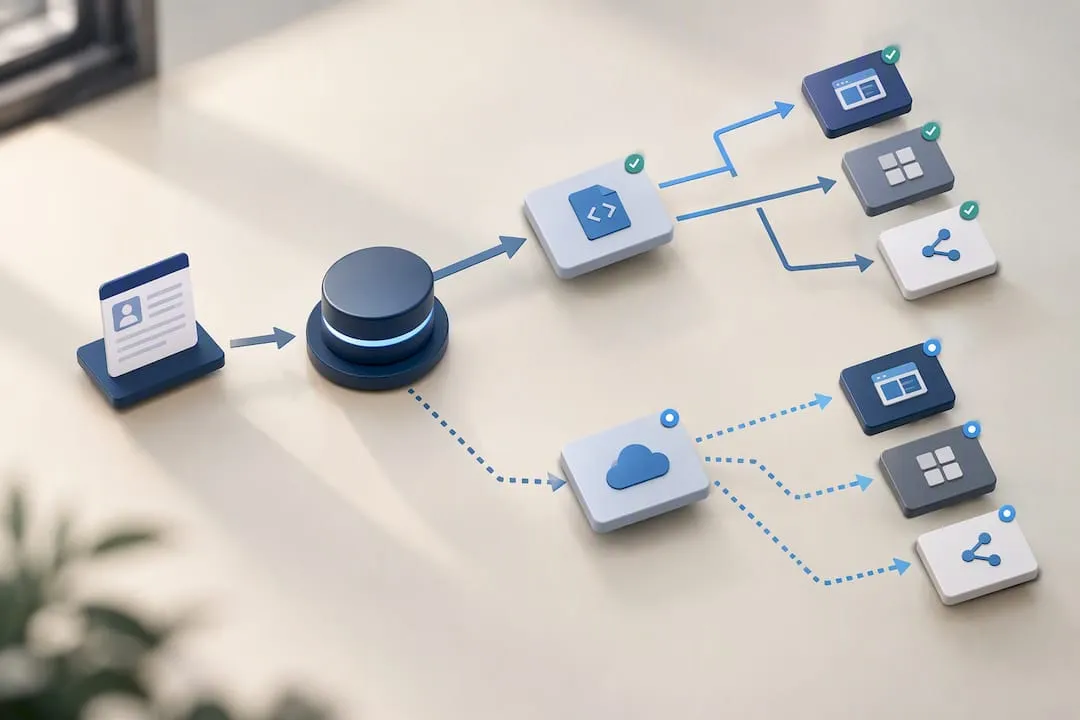
CV parsing turns an unstructured PDF or Word document into a structured candidate profile, pulling out contact details, work history and, critically for this sector, SIA licence numbers and vetting status. Matching then flags candidates against your live vacancies.
Admin automation covers the unglamorous but time-hungry tasks: scheduling interviews, sending automatic reminders, answering routine candidate questions through a chatbot, and firing off status updates. This is where most small security firms see the fastest return, because a two- or three-person recruitment team often loses hours a week to repetitive messaging rather than actual vetting or shortlisting.
A small guarding firm running six vacancies a month, for instance, might automate posting and reminders entirely while still having a human read every CV before a licence check goes ahead.
- Multi-posting cuts the time spent re-entering the same advert across boards.
- CV parsing speeds up initial sorting but doesn’t replace a human read.
- Scheduling and reminder bots reduce no-shows for interviews and vetting appointments.
- Chatbots handle FAQ traffic (pay rate, shift patterns, licence requirements) so recruiters field only genuine queries.
Pro Tip: If you’re posting the same SIA-licensed role across several boards, standardise your advert template first. Automation multiplies whatever quality you feed into it, good or bad.
What does UK law require before you automate decisions?
UK GDPR treats fully automated decisions with legal or similarly significant effect, such as auto-rejecting a candidate with no human input, as a special category under Article 22. If your automation reaches that threshold, a DPIA isn’t optional; it’s a legal prerequisite, and the Responsible AI in recruitment guide sets out when that threshold is met and what AI assurance mechanisms should sit alongside it.
The ICO has been explicit that automated decision-making can genuinely speed up hiring, but only when employers monitor for bias, stay transparent with candidates, and give them a real route to human review. Four obligations sit underneath that:
- Transparency. Tell candidates when automation is involved in screening, and explain in plain terms how it affects their application.
- Meaningful human review. A reviewer must be able to actually change the outcome, not just rubber-stamp it. The ICO’s own testing standard treats cursory sign-off as a failure, not a safeguard.
- Right to human review. Candidates need a clear path to ask a person to look again at a rejection.
- Data minimisation. Don’t collect more than the decision needs. The ICO specifically warns against gathering video or biometric data after a decision has already been made, since that risks breaching both fairness and minimisation principles.
For security recruitment specifically, this matters because you’re already handling sensitive vetting data, BS 7858 references and SIA licence numbers. Layering automated scoring on top of that without a DPIA multiplies your exposure rather than your efficiency. Our guide on job seeker privacy in the UK covers the practical side of what candidates are entitled to know.
How do you roll out automation without breaking compliance?
Rolling out job listing automation works best as a staged process rather than a single switch-flip. Rushing straight to automated scoring is the single most common way employers end up needing a DPIA retrospectively, after a candidate complaint, rather than before launch.
- Map every automation touchpoint you’re considering and grade each one low, medium or high risk. Posting and scheduling are low risk; CV parsing that feeds a ranking score edges into medium; automatic rejection is high risk by default.
- Complete a DPIA before switching on anything in the high-risk band, including automated scoring or auto-rejection. Practical guidance from recruitment specialists backs starting with low-risk automations like drafting, scheduling and chatbots and holding scoring back until safeguards are proven.
- Pilot with a genuinely diverse group of candidates and reviewers before wider rollout, checking outcomes don’t skew against any group.
- Instrument logs for every automated decision. You need a record of what the system suggested and what the human reviewer actually did with it.
- Train reviewers to make and record real interventions, not just approvals, so you have evidence the human review step has teeth.
- Set a bias-monitoring cadence. Regulatory guidance points to monthly reviews as sound practice for high-impact automated systems, alongside updated privacy notices and supplier evidence such as model cards and test reports.
Bullet-point checklist for the pilot phase:
- Confirm which fields matter for security vacancies (SIA licence expiry, vetting status) are captured correctly by the parser.
- Check the chatbot’s FAQ answers against your actual policies, not a generic template.
- Verify reminder and scheduling automations respect shift-pattern realities rather than office-hours defaults.
- Keep a written log of every case where a human reviewer overturned or amended an automated suggestion.
Pro Tip: Run your pilot on a role you’d be comfortable explaining candidate-by-candidate to the ICO. If you wouldn’t want to defend a decision in writing, don’t automate it yet.
Our job posting workflow guide for UK security employers walks through the low-risk end of this in more detail, and the applicant data playbook covers the record-keeping side.
What should you ask a vendor before signing?
Before any contract is signed, put the vendor’s claims on the record. Verbal assurances about “fair AI” mean nothing without paperwork behind them.
- Ask for the supplier’s DPIA, model cards and bias-test reports, including how often testing happens and what methodology it uses.
- Get controller and processor roles defined in writing, since responsibility for UK GDPR compliance stays with you as the employer, not the vendor.
- Demand contractual guarantees on bias monitoring frequency, data retention limits and your right to audit access.
- Confirm the technical basics: XML feed reliability, how SIA licence fields map into their system, integration service levels, and what happens if a feed fails.
- Insist candidates get a clear, written explanation when automation touches their application, and that the human-review workflow is documented and testable, not just promised.
A broader comparison of HR software evaluation criteria is a useful cross-check for the non-security-specific parts of this list, though sector fields like licence tracking need separate scrutiny. Our own applicant tracking system guide covers what to check when mapping those fields.
Balancing speed with compliance in security recruitment
Automate the boring parts hard: posting, reminders, chatbots, scheduling. Leave shortlisting and rejection to a person until your DPIA and bias controls are actually in place, not just planned. Generic HR platforms often miss sector specifics like SIA licence expiry tracking or BS 7858 vetting fields, which is exactly where a security-focused board earns its keep. Resources built for this niche, including our own GDPR-compliant job boards comparison, exist because generic tools weren’t designed with vetting realities in mind.
— Rob
Post smarter without cutting corners on compliance
The platform is built specifically for UK security employers, so automation here doesn’t mean bolting a generic HR tool onto a sector it wasn’t designed for. Employers can post a job and review CV access plans directly, use an applicant tracker suited to security vacancies, and rely on built-in GDPR support rather than assembling compliance from scratch.

The platform’s BSIA affiliation adds a layer of sector credibility that generic job boards can’t offer, and its focus stays entirely on security roles, from licensed guarding to project management positions like this Project Manager vacancy. For firms scaling recruitment across multiple sites, standard listings, featured ads and multi-role campaign packages cover everything from a single vacancy to a full hiring drive. If you’re ready to move a vacancy live, visit the employer page and post your first role today.
Sources
Before switching on any scoring or rejection automation, check the Responsible AI in recruitment guide and the ICO’s guidance on automated decision-making. Pair these with our GDPR compliance guide for security employers and keep your DPIA under regular review as ICO guidance updates.
This article is general information, not a substitute for advice from a qualified lawyer. Consult a qualified legal professional about your own circumstances before acting on anything here.
- Responsible AI in recruitment guide
- Automated decisions can streamline the hiring process – with the right safeguards in place | ICO
- Algorithms in the hiring room: ICO spotlights automated recruitment
- How to use AI in recruitment without breaking UK law | Operosus
FAQ
Is job listing automation legal for UK security employers?
Yes, posting, distributing and scheduling vacancies through automation is entirely lawful under UK GDPR. The legal risk only rises when automation makes a rejection or scoring decision with no meaningful human review, which is when a DPIA becomes necessary.
Do I need a DPIA to automate job postings?
No, a DPIA isn’t required for posting, multi-distribution or scheduling automation, since these don’t make decisions about individual candidates. It becomes necessary once automation scores, ranks or rejects applicants with minimal human input.
What counts as meaningful human review?
The ICO’s own standard requires a reviewer who can genuinely change an automated outcome, not one who simply approves it without scrutiny. Cursory sign-off does not meet this bar, so reviewers need training and a record of actual interventions.
How much does job listing automation cost for a security employer?
Costs vary by vendor and by whether you’re buying posting tools, an applicant tracker, or full CV-parsing systems, so current pricing is best checked directly with the provider. Security Jobs Board lists its posting and CV access options and employer campaign packages on its site, with pricing available on request.
How long does implementation typically take?
A low-risk rollout covering posting, scheduling and chatbots can be live within days on a platform built for the sector. Adding CV parsing or any scoring feature takes longer, since it requires a completed DPIA, a diverse pilot group and instrumented logging before wider deployment.


