Best Practices for Job Postings in Security Recruitment

Nearly 60 percent of British employers say it is getting harder to find qualified security professionals each year. The growing demand for expertise in cyber and physical security puts pressure on organisations to refine how they attract and assess talent. By focusing on a clear profile of your ideal candidate and structuring your recruitment process with legal and strategic insight, you can secure the best fit for your British security team and raise your standards above common industry hurdles.
Table of Contents
- Step 1: Define Your Ideal Security Candidate Profile
- Step 2: Craft A Clear And Compliant Job Description
- Step 3: Optimise Your Posting For UK Security Job Boards
- Step 4: Ensure GDPR Compliance And Candidate Confidentiality
- Step 5: Evaluate Application Quality And Refine Postings
Quick Summary
| Key Point | Explanation |
|---|---|
| 1. Define Candidate Profile Precisely | Establish a detailed understanding of required competencies to attract suitable security talent effectively. |
| 2. Craft Clear Job Descriptions | Ensure the job description is comprehensive and complies with legal standards to attract ideal candidates. |
| 3. Optimize Job Postings for Visibility | Use strategic placement on job boards and highlight competitive benefits to reach top candidates in the UK. |
| 4. Maintain Data Protection Compliance | Implement GDPR-compliant protocols to safeguard candidate information and foster trust during the recruitment process. |
| 5. Evaluate and Refine Candidate Applications | Develop a structured evaluation process to identify quality applicants and continuously improve job postings based on insights. |
Step 1: Define your ideal security candidate profile
Successfully recruiting security professionals requires a strategic approach to defining your candidate profile. By developing a comprehensive understanding of your precise requirements, you create a targeted recruitment framework that attracts top talent.
Begin by mapping out the specific competencies and qualifications essential for your security role. Candidate competency identification is crucial according to government cyber security skills research, which emphasises the importance of clear skill specifications. Your profile should encompass technical capabilities, professional certifications, physical fitness standards, psychological resilience, and personality traits unique to security work.
Consider creating a multi dimensional profile that goes beyond traditional recruitment checklists. Assess candidates across technical knowledge, operational experience, psychological fitness, and ethical standards. This holistic approach ensures you select personnel capable of handling complex security challenges with precision and professionalism.
Advanced tip: Create a scoring matrix that objectively ranks candidate attributes against your specific security role requirements, allowing for systematic and fair candidate evaluation.
Here is a comparison of common security candidate evaluation dimensions and their organisational benefits:
| Evaluation Dimension | Description | Organisational Benefit |
|---|---|---|
| Technical Expertise | Specific security skills and tools | Ensures robust technical defences |
| Operational Experience | Real-world security background | Improves incident response capability |
| Psychological Fitness | Stress management and resilience | Enhances reliability under pressure |
| Ethical Standards | Adherence to ethical guidelines | Maintains reputation and trust |
| Physical Fitness | Physical capability for role tasks | Reduces risk during security incidents |
Step 2: Craft a clear and compliant job description
Developing a precise and legally compliant job description is fundamental to attracting the right security talent. Your goal is to create a document that not only describes the role comprehensively but also meets regulatory requirements.
Job description documentation must adhere to specific legal standards for safer recruitment practices, particularly within the security sector. Begin by outlining the core responsibilities, required qualifications, and key performance expectations. Ensure your description includes specific details about technical skills, operational knowledge, physical requirements, and psychological attributes necessary for the security role. This approach helps candidates understand the full scope of the position and allows you to screen applicants more effectively.

Structure your job description with clear sections that provide transparency about the role. Include information about potential background checks, security clearance requirements, and any specialised training needed. Be explicit about the working environment, potential challenges, and the specific competencies required. This level of detail helps attract candidates who are genuinely suited to the role and understand the professional expectations.
Professional tip: Consult with legal and HR professionals to ensure your job description meets all current employment regulations and accurately represents the role’s demands.
Step 3: Optimise your posting for UK security job boards
Successfully attracting top security talent requires strategic job board placement and thoughtful content design. Your goal is to maximise visibility and appeal to high quality candidates across the United Kingdom.
Understanding the geographical distribution of cyber security job postings can significantly enhance your recruitment strategy, helping you target specific regional talent pools effectively. Focus on creating a compelling job description that highlights unique role attributes, competitive benefits, and clear career progression opportunities. Consider using industry specific keywords that resonate with security professionals and align with current recruitment trends in the UK market.
Leverage multiple platforms to increase your job posting reach. Utilise specialised security job boards, professional networking sites, and industry specific forums to expand your candidate pool. Ensure your posting is mobile friendly, includes comprehensive role details, and communicates your organisation’s commitment to professional development and workplace culture. Pay attention to formatting, readability, and use concise language that speaks directly to potential applicants.
Professional tip: Regularly analyse your job posting metrics to understand which platforms and content approaches generate the most qualified candidate applications.
Step 4: Ensure GDPR compliance and candidate confidentiality
Protecting candidate personal information is a critical responsibility for security recruiters. Your approach must balance thorough screening with stringent data protection principles to maintain trust and legal compliance.
The UK government’s recruitment privacy guidelines offer comprehensive insights into processing personal data during recruitment, ensuring organisations understand their GDPR obligations. Implement robust data handling protocols that limit access to candidate information, use secure digital storage systems, and obtain explicit consent for data processing. Develop clear privacy notices that transparently communicate how personal details will be collected, used, stored, and potentially shared during the recruitment process.
Establish strict internal procedures for managing candidate data throughout the recruitment lifecycle. This includes securing digital files with encryption, restricting physical document access, implementing secure deletion processes, and training recruitment staff on data protection best practices. Regularly audit your data management systems to identify and address potential vulnerabilities, demonstrating your commitment to maintaining candidate confidentiality and regulatory compliance.
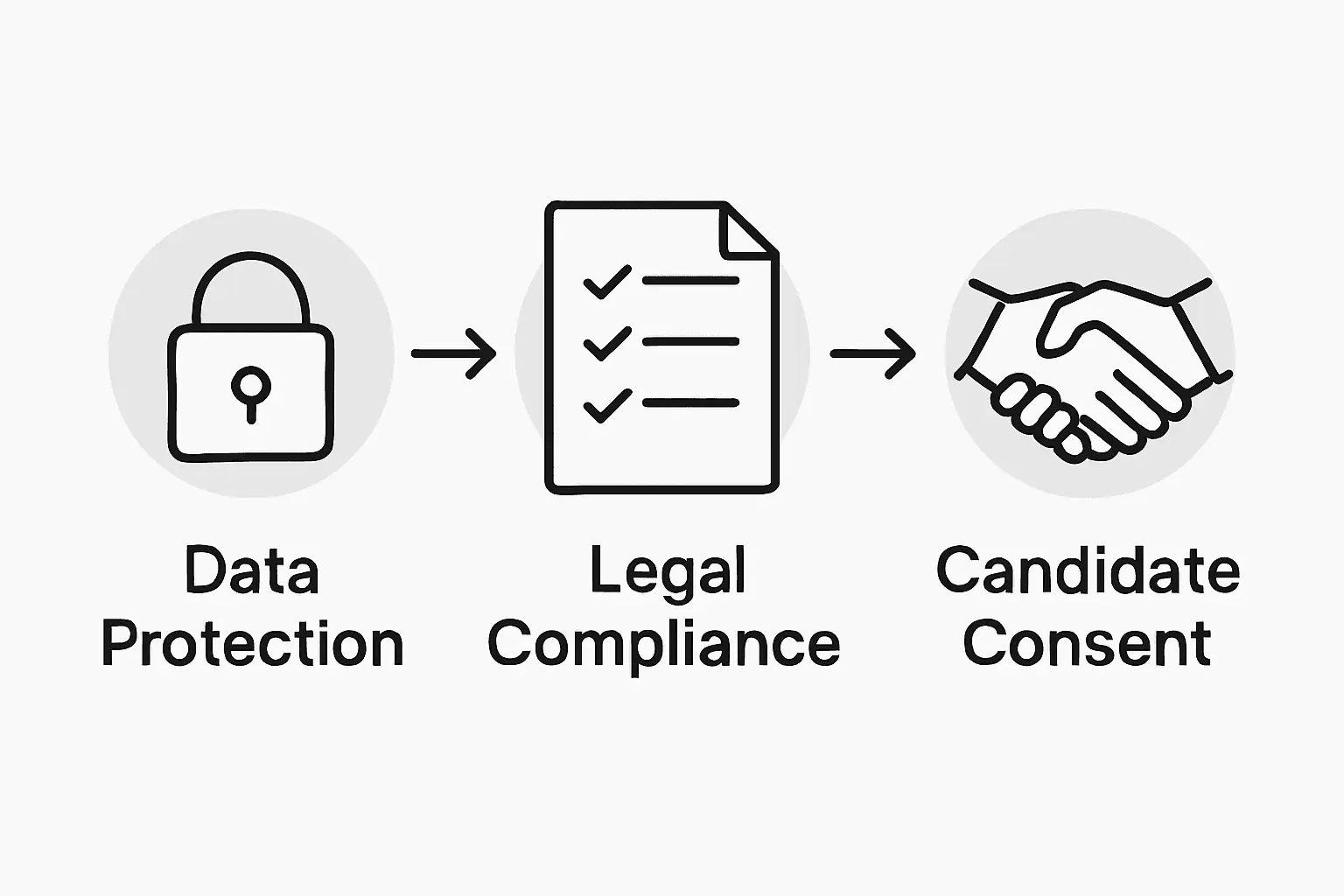
Professional tip: Create a standardised candidate consent form that clearly outlines data usage permissions and provides candidates with options to control their personal information throughout the recruitment process.
Step 5: Evaluate application quality and refine postings
Successful security recruitment demands a systematic approach to assessing candidate applications and continuously improving your job posting strategy. Your objective is to develop a robust evaluation process that identifies top talent while refining your recruitment approach.
Comprehensive pre-employment checks are crucial for maintaining high standards in candidate selection, enabling recruiters to make informed hiring decisions. Develop a structured evaluation framework that goes beyond surface level credentials. This should include detailed skills assessments, behavioural competency screening, and verification of professional qualifications specific to security roles. Create a scoring matrix that objectively ranks candidates against critical role requirements, ensuring you consistently identify candidates who match your precise organisational needs.
Implement a cyclical feedback mechanism that allows you to continuously refine your job postings based on application insights. Analyse patterns in candidate applications, identifying areas where your job descriptions might be unclear or attracting unsuitable candidates. Track metrics such as application quality, candidate conversion rates, and alignment with role requirements. Use these insights to progressively adjust your job posting language, required qualifications, and screening criteria to attract more precisely matched security professionals.
Use this summary as guidance for evaluating and refining your security job postings:
| Evaluation Metric | What It Reveals | Action Based on Insights |
|---|---|---|
| Application Quality | Suitability of applicants | Adjust requirements or descriptions |
| Conversion Rate | Percentage moving to interview stage | Refine screening or job adverts |
| Skills Alignment | How closely skills fit requirements | Update keywords and criteria |
| Candidate Feedback | Applicants’ view of process clarity | Clarify role or recruitment steps |
Professional tip: Conduct quarterly reviews of your recruitment data to identify trends and systematically update your job posting templates, ensuring they remain current and effective in attracting top security talent.
Enhance Your Security Recruitment with Targeted Job Postings
Recruiting top security professionals demands precision in defining candidate profiles and crafting job descriptions that align with strict regulatory standards like GDPR. The challenges of attracting qualified applicants, ensuring data protection, and refining your postings based on quality assessments require robust specialised tools designed for the UK security market. By leveraging proven methodologies such as competency scoring matrices and thorough screening practices, you can overcome recruitment hurdles and build a resilient security workforce.

Discover how The Security Jobs Board can streamline your hiring process by providing a dedicated platform tailored to your needs. Post your security vacancies with confidence, access a curated pool of vetted candidates, and benefit from GDPR-compliant features that safeguard personal data every step of the way. Take control of your recruitment success and join the trusted community that prioritises quality matches and professional growth within the UK security sector. Start optimising your job postings today at https://www.securityjobsboard.co.uk/.
Frequently Asked Questions
How do I define the ideal candidate profile for a security role?
To define the ideal candidate profile for a security role, map out the specific competencies and qualifications required. Identify crucial technical skills, professional certifications, and necessary psychological attributes, ensuring a comprehensive understanding of the role’s demands.
What should I include in a legal job description for a security position?
A legal job description for a security position should include core responsibilities, required qualifications, and key performance expectations. Clearly outline technical skills, operational knowledge, and any necessary background checks to ensure compliance and attract suitable candidates.
How can I optimise my job posting for better visibility?
To optimise your job posting for better visibility, use industry-specific keywords and create a compelling description that highlights unique role attributes. Post your vacancy across multiple platforms, including specialised job boards and professional networking sites, to reach a wider audience.
What are the best practices for ensuring GDPR compliance in recruitment?
To ensure GDPR compliance in recruitment, implement strict data handling protocols that protect candidate information. Obtain explicit consent for data processing and develop clear privacy notices to inform candidates about how their information will be used and stored.
How do I evaluate the quality of security candidate applications?
To evaluate the quality of security candidate applications, develop a structured evaluation framework that assesses skills, experience, and ethical standards. Use a scoring matrix to rank candidates against role requirements, allowing you to consistently identify top talent for your organisation.
What metrics should I track to refine my job postings?
Track metrics such as application quality, conversion rate, and skills alignment to refine your job postings. Regularly review these insights to adjust your requirements and improve clarity in your job descriptions, with quarterly reviews recommended to identify trends.


