What Is Perimeter Security? Complete Overview UK
Nearly one in three british organisations has experienced a perimeter security breach in recent years, putting critical assets and infrastructure at risk. With threats growing both in scale and sophistication, understanding how perimeter security works is now more important than ever. This guide offers a clear look at the strategies, solutions, and standards shaping british protection of property and personnel, so you can make informed decisions about defending what matters most.
Table of Contents
- Defining Perimeter Security In The UK Context
- Types Of Perimeter Security Solutions
- How Perimeter Security Systems Operate
- Key Applications In Security Environments
- Risks, Compliance, And Best Practice Guidelines
Key Takeaways
| Point | Details |
|---|---|
| Perimeter Security Overview | Perimeter security in the UK incorporates both physical barriers and advanced technologies to protect assets and personnel from unauthorised access. |
| Integrated Solutions | A multi-layered approach that combines physical deterrents, electronic surveillance, and access control is essential for effective security. |
| Adaptability to Threats | Modern systems must be capable of adapting to evolving security challenges to provide comprehensive protection across various environments. |
| Risk Management and Compliance | Organisations need to conduct threat assessments and adhere to compliance standards to ensure effective and robust perimeter security strategies. |
Defining Perimeter Security in the UK Context
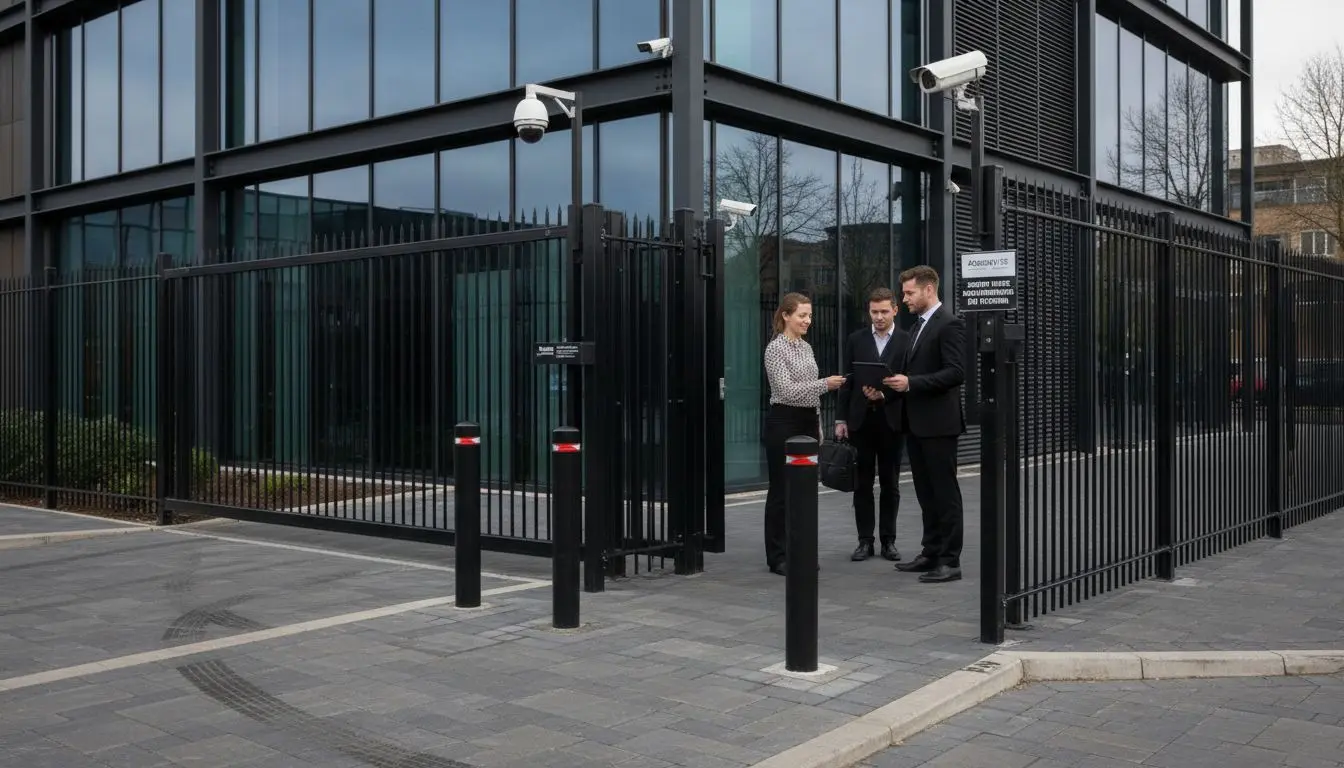
Perimeter security represents the strategic implementation of physical and technological barriers designed to protect assets, properties, and personnel from unauthorized access. According to en.wikipedia.org, this practice involves creating boundaries that prevent intrusion while maintaining controlled entry points.
In the UK context, perimeter security goes beyond simple physical obstacles. gov.uk emphasises a comprehensive approach that integrates multiple defensive strategies. Key components typically include:
- Physical barriers: Robust fencing, walls, and railings meeting British Standards
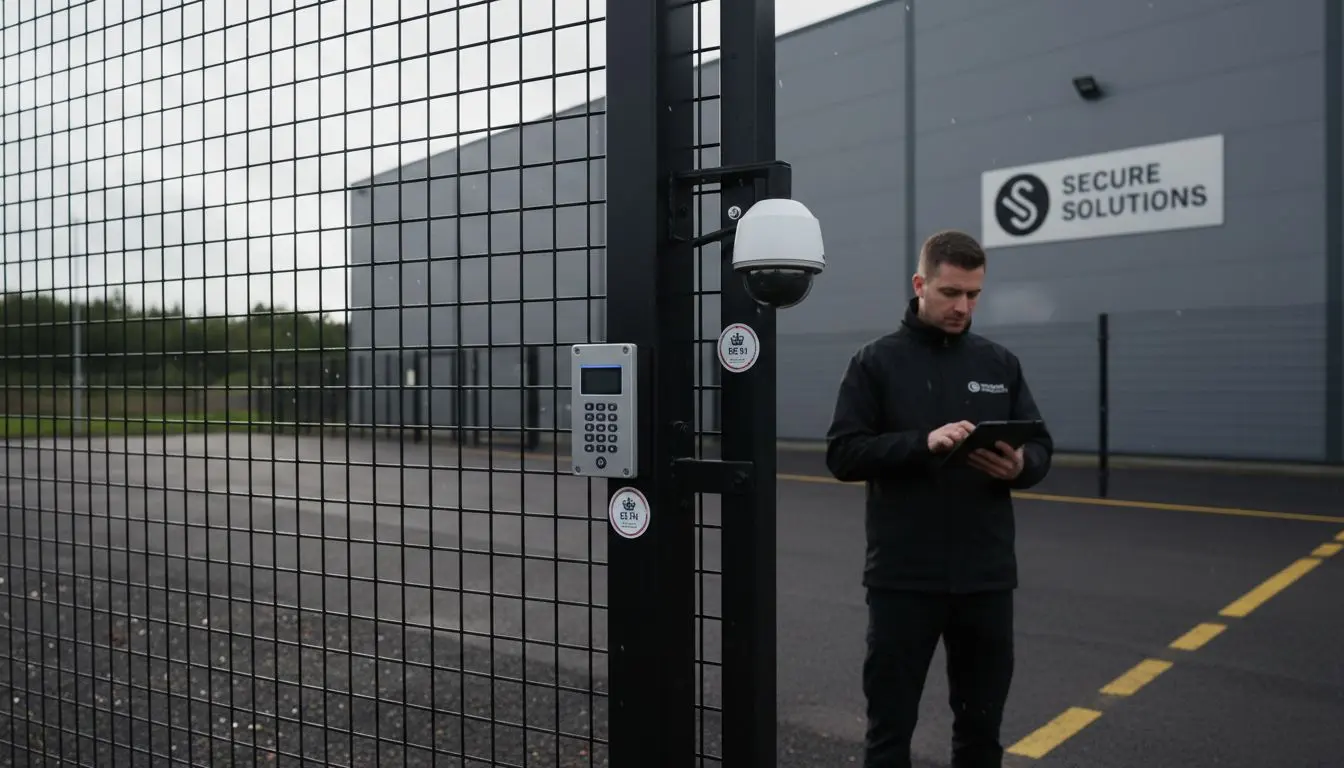
- Access control systems: Electronic gates, turnstiles, and security checkpoints
- Surveillance technologies: CCTV cameras, motion sensors, and integrated alarm systems
- Clear visibility: Maintaining unobstructed lines of sight to discourage potential security breaches
Understanding perimeter security requires recognising it as a dynamic, multilayered defence mechanism. Modern UK security practices blend traditional physical fortifications with advanced technological solutions, creating intelligent systems that adapt to evolving threat landscapes. The goal remains consistent: protecting critical infrastructure, organisational assets, and human resources through strategic, proactive boundary management.
For deeper insights into comprehensive security strategies, explore our Physical Security Explained: Complete UK Industry Guide.
Types of Perimeter Security Solutions
Perimeter security solutions in the UK encompass a diverse range of physical and technological approaches designed to protect critical assets. npsa.gov.uk highlights that these solutions are strategically developed to deter, detect, and delay unauthorized access, with specific implementations tailored to threat levels.
Physical Barrier Solutions include:
- Robust security fencing
- Reinforced gates
- Concrete barriers
- Wall systems
- Bollards and vehicle blockers
Electronic and technological solutions, as outlined by clearway.co.uk, provide advanced protection mechanisms such as:
- Intrusion detection sensors
- Access control systems
- Automatic number plate recognition (ANPR)
- Key fob entry mechanisms
- CCTV surveillance networks
Advanced perimeter security increasingly integrates multiple technologies, creating intelligent, adaptive systems that provide comprehensive protection. These solutions go beyond traditional boundaries, offering nuanced, layered defence strategies that can be customised to specific organisational requirements and threat profiles.

To explore more comprehensive security strategies, check out our Security Checks Explained: Essential Guide for UK Industry.
How Perimeter Security Systems Operate
Perimeter security systems function through a sophisticated network of integrated technologies designed to monitor, detect, and respond to potential security threats. clearway.co.uk explains that these systems combine physical barriers with advanced electronic detection methods, creating a comprehensive security approach.
The operational mechanics involve multiple layers of protection:
- Detection Technologies:
- Intrusion sensors that monitor entry points
- Motion detection systems
- Pressure-sensitive ground cables
- Thermal imaging cameras
- Alert Mechanisms:
- Instant notification to security personnel
- Automated alarm triggers
- Real-time video surveillance
- Emergency response protocols
According to g4s.com, advanced systems deploy sophisticated technologies like microphonic cables on fences, underground pressure-sensitive cables, and bistatic microwave links. These technologies work continuously, providing round-the-clock monitoring and creating multiple redundant detection points.
Modern perimeter security systems are intelligent, adaptive networks that transform passive boundaries into active, responsive defence mechanisms. By integrating physical infrastructure with cutting-edge electronic monitoring, these systems offer organisations a proactive approach to security management.
For a deeper understanding of security screening processes, explore our Security Screening Guide.
Key Applications in Security Environments
Perimeter security plays a critical role across diverse security environments in the United Kingdom, adapting to protect various sensitive locations and infrastructure. en.wikipedia.org highlights the iconic ‘ring of steel’ in London’s financial district as a prime example, where road barriers, strategic checkpoints, and extensive CCTV surveillance create a robust defence mechanism against potential threats.
Key application environments for perimeter security include:
- Critical National Infrastructure
- Government and public buildings
- Financial and commercial districts
- Transport hubs and airports
- Industrial and manufacturing facilities
- Educational and healthcare institutions
The UK’s approach to perimeter security demonstrates remarkable adaptability. en.wikipedia.org notes the National Barrier Asset as a prime example, featuring modular fence systems specifically designed to protect high-profile locations and public events from vehicle-borne attacks. These systems represent a dynamic, responsive strategy that can be rapidly deployed to mitigate emerging security risks.
Modern perimeter security solutions are no longer static barriers but intelligent, adaptive networks that integrate physical infrastructure with advanced technological monitoring. By combining physical deterrents with electronic surveillance, these systems provide comprehensive protection tailored to specific environmental challenges.
To understand how security risks intersect with protective strategies, explore our What Is Security Risk? Complete UK Sector Guide.
Risks, Compliance, and Best Practice Guidelines
Perimeter security requires a comprehensive approach to managing risks and maintaining rigorous compliance standards. gov.uk provides critical guidance highlighting key risk mitigation strategies, including secure fencing, controlled access points, and strategic lighting to enhance overall security infrastructure.
Key risk management considerations include:
-
Threat Assessment
- Identifying potential vulnerabilities
- Evaluating site-specific security challenges
- Conducting regular risk audits
-
Compliance Requirements
- Adhering to national security standards
- Implementing robust access control protocols
- Maintaining detailed security documentation
npsa.gov.uk emphasises the critical importance of selecting appropriate security standards based on comprehensive threat assessments. This approach ensures organisations can effectively mitigate risks by implementing tailored, intelligent security solutions that adapt to evolving threat landscapes.
Best practice guidelines recommend a multi-layered security approach that combines physical barriers, technological monitoring, and systematic risk evaluation. Security professionals must continuously update their strategies, integrating advanced detection technologies and maintaining flexibility in response protocols.
To gain deeper insights into integrated security strategies, explore our What Is Integrated Security? Complete Guide for 2025.
Strengthen Your Career in Perimeter Security with UK Experts
Understanding perimeter security requires deep knowledge of physical barriers, access control systems, and technological surveillance. If you are aiming to work in this critical sector or seeking skilled professionals who master these multilayered defence mechanisms, the Security Jobs Board connects you with real opportunities tailored for this growing field. Whether your goal is to contribute to safeguarding critical infrastructure or innovate with integrated security solutions, acting now ensures you do not miss out on roles driving the future of UK security.

Discover the best security roles and trusted candidates right here. Start by visiting Security Jobs Board where you can create your profile or post your vacancy quickly and securely. Take your next step in the UK’s perimeter security sector with confidence and speed. Find your perfect match today and help protect what matters most.
Frequently Asked Questions
What is perimeter security?
Perimeter security refers to the implementation of physical and technological barriers to protect assets, properties, and personnel from unauthorized access. It includes strategies such as fencing, surveillance technologies, and access control systems.
What are the key components of perimeter security solutions?
Key components include physical barriers like robust fencing and walls, access control systems such as electronic gates, surveillance technologies like CCTV cameras, and maintaining clear visibility to discourage intrusions.
How do perimeter security systems operate?
Perimeter security systems function through a combination of detection technologies, such as motion sensors and CCTV, along with alert mechanisms that notify security personnel of potential threats, ensuring proactive monitoring and response.
What are the best practices for perimeter security compliance and risk management?
Best practices include conducting regular threat assessments, adhering to national security standards, implementing robust access control protocols, and maintaining detailed security documentation to effectively mitigate risks.


