Job Alerts: Fast-Tracking Security Careers in the UK

Every british jobseeker in the security industry knows how quickly opportunities can slip by. With competition rising and many roles filled within days, finding fast, effective ways to hear about new positions has never been more crucial. By using smart job alerts, security professionals gain a clear advantage in a fast-moving market, making it easier to stay informed and react before others even hear about new openings.
Table of Contents
- Job Alerts Explained for Security Sector
- Types of Job Alerts and Key Differences
- How Job Alerts Work on Security Jobs Board
- Benefits and Risks of Using Job Alerts
- Essential Privacy and GDPR Compliance Tips
Key Takeaways
| Point | Details |
|---|---|
| Utilise Job Alerts | Job alerts significantly streamline job searching in the security sector, offering customised notifications for new roles based on user preferences. |
| Types of Job Alerts | Understanding the differences between standard, specialised, and flexible job alerts enables jobseekers to tailor their search effectively. |
| Actively Manage Alerts | Regularly updating search criteria and refining alert settings can improve the relevance of job matches and enhance career progression opportunities. |
| Prioritise Privacy | Maintaining awareness of data protection and GDPR compliance is essential while using online job platforms to safeguard personal information. |
Job Alerts Explained for Security Sector
Securing a position in the security sector requires strategic job search techniques, and job alerts have emerged as a powerful tool for professionals seeking timely career opportunities. By utilising targeted notifications, security personnel can stay ahead of emerging roles and rapidly respond to new openings across the United Kingdom.
Job alerts function as personalised career intelligence systems, allowing security professionals to track flexible job opportunities without constantly monitoring multiple platforms. These intelligent notification services automatically scan job boards, compile relevant positions matching your specific criteria, and deliver them directly to your email or mobile device. For security sector jobseekers, this means:
- Instant notifications about new security roles
- Customisable search parameters
- Reduction in manual job searching time
- Enhanced visibility of niche or specialised positions
The mechanics of job alerts are straightforward. After creating a profile on platforms like Security Jobs Board, candidates input their preferred job parameters such as location, security specialisation, experience level, and desired salary range. The system then cross-references incoming job postings against these preferences, sending curated opportunities directly to the candidate. This approach transforms passive job hunting into an active, streamlined process that maximises a professional’s potential for career progression in the security industry.
Professionals should approach job alerts strategically. Regularly updating search criteria, maintaining a current CV, and setting precise filters will significantly improve the quality of job matches. By treating job alerts as a professional tool rather than a passive service, security sector workers can transform their career trajectory and unlock opportunities that might otherwise remain undiscovered.
Types of Job Alerts and Key Differences
The security sector offers diverse job alert mechanisms designed to cater to different professional needs and preferences. Understanding these variations is crucial for jobseekers aiming to optimise their career search strategies. Job alerts come in multiple formats, each with unique characteristics tailored to specific employment requirements.
One prominent category includes flexible job opportunity alerts that focus on part-time and adaptable security roles. These specialised notifications help professionals identify positions matching their desired working patterns, location preferences, and schedule constraints. Typically, job alert types can be categorised as follows:
-
Standard Job Alerts
- Broad industry notifications
- General role-based updates
- Minimal customisation options
-
Specialised Job Alerts
- Targeted to specific security sub-sectors
- Precise role and skill matching
- Advanced filtering capabilities
-
Flexible Schedule Alerts
- Part-time and contract positions
- Location-specific opportunities
- Customised work arrangement notifications
The key differentiator between these alert types lies in their level of specificity and personalisation. Standard alerts provide broad industry updates, while specialised alerts offer granular matching based on precise professional criteria. Advanced job alert systems now employ sophisticated algorithms that analyse a candidate’s profile, skills, and preferences to deliver increasingly refined job recommendations.
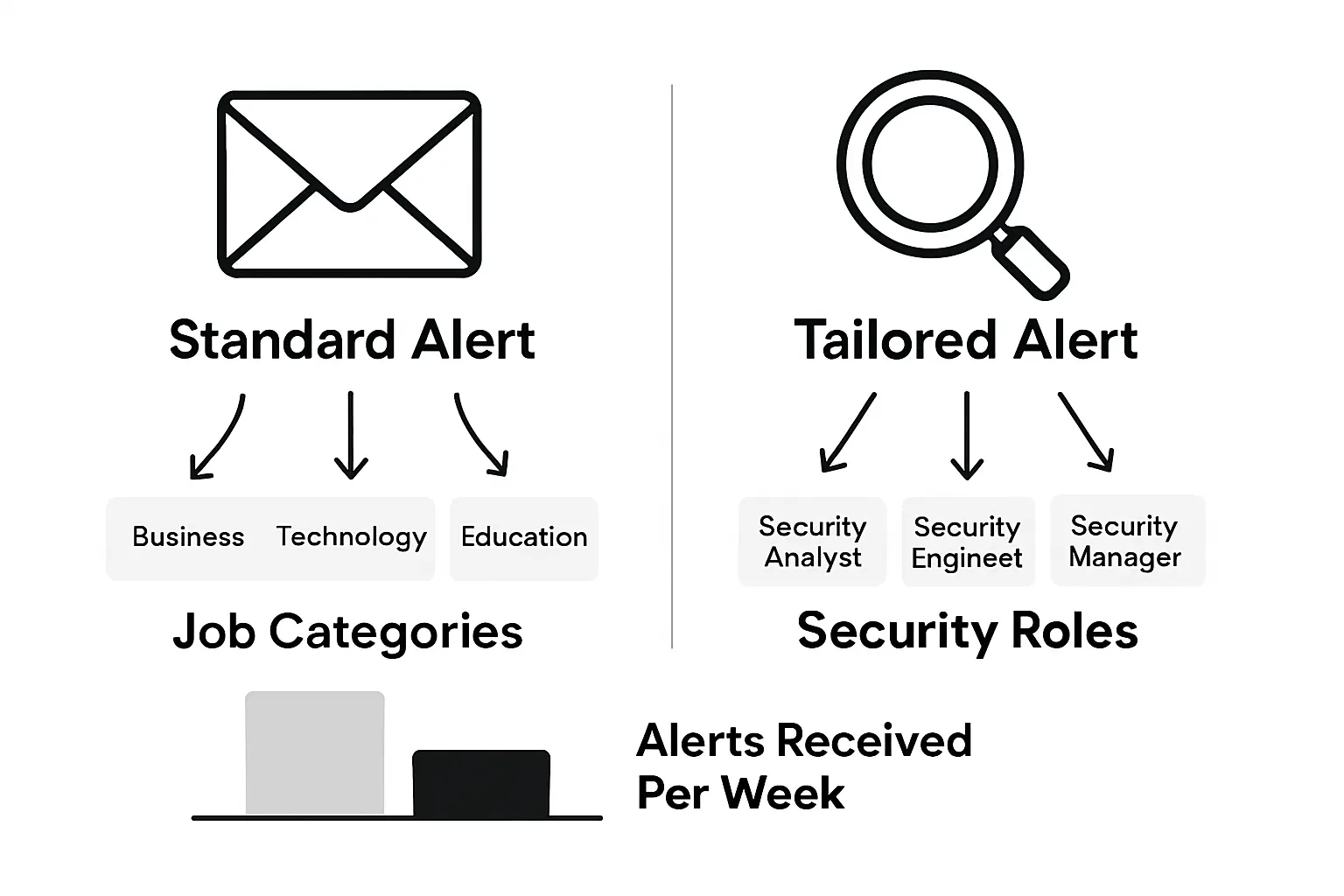
Professionals should strategically select job alert types that align with their career goals. By understanding the nuanced differences between alert mechanisms, security sector jobseekers can develop a more targeted and efficient job search approach, ultimately increasing their chances of finding ideal employment opportunities.
How Job Alerts Work on Security Jobs Board
Navigating the complex landscape of security sector employment requires sophisticated job search tools, and the Security Jobs Board offers a comprehensive system designed to streamline career opportunities. Job alerts represent a sophisticated digital matchmaking service that connects security professionals with precisely targeted employment prospects across the United Kingdom.
The platform’s job alert mechanism begins with subscribing to flexible job notifications, where candidates create detailed professional profiles that serve as sophisticated search parameters. Users can customise their alert preferences with remarkable precision, including:
- Specific security sub-sectors
- Desired geographical regions
- Preferred employment types
- Minimum salary expectations
- Required qualifications and experience levels
Once a profile is established, the platform’s advanced algorithmic system continuously scans thousands of job listings, performing real-time matching against each registered candidate’s unique criteria. This intelligent filtering process ensures that professionals receive only the most relevant job opportunities, dramatically reducing time spent on manual job searching and increasing the likelihood of finding ideal career positions.

The technical infrastructure behind these job alerts involves complex data processing and machine learning techniques. Each incoming job posting is systematically analysed and cross-referenced against user profiles, with match percentages calculated instantaneously. Notifications are then dispatched via email or mobile application, providing security professionals with immediate insights into potential career advancements. By leveraging such sophisticated technology, the Security Jobs Board transforms traditional job hunting from a passive into an proactive, data-driven experience that empowers security sector professionals to take control of their career trajectories.
Benefits and Risks of Using Job Alerts
Navigating the security job market requires a strategic approach, and job alerts represent a powerful tool for professionals seeking career advancement. Understanding the nuanced landscape of automated job notifications helps security sector workers maximise their employment opportunities while mitigating potential drawbacks.
The platform offers comprehensive job alert services with both advantages and potential pitfalls, requiring careful consideration and strategic implementation. Professionals can expect a range of benefits and risks that demand thoughtful navigation:
Benefits:
- Instant access to latest job opportunities
- Time-efficient job searching
- Customisable notification parameters
- Reduced manual searching effort
- Wider exposure to potential roles
Potential Risks:
- Information overload
- Potential for irrelevant job matches
- Increased digital noise
- Potential privacy concerns
- Risk of missing non-algorithmic opportunities
Successful job alert utilisation demands a proactive and discerning approach. Professionals must regularly review and refine their alert criteria, ensuring the notifications remain precise and relevant to their specific career trajectories. This involves maintaining an up-to-date professional profile, setting granular search parameters, and developing a critical approach to evaluating recommended positions.
Ultimately, job alerts are a sophisticated tool that require intelligent management. By understanding their intricate mechanics and maintaining an active, strategic approach, security sector professionals can transform these digital notifications from potential distractions into powerful career development instruments. The key lies in treating job alerts as a dynamic resource rather than a passive information stream.
Essential Privacy and GDPR Compliance Tips
In the digital landscape of job searching, data protection has become paramount for security professionals navigating online recruitment platforms. Understanding and implementing robust privacy measures is not just a legal requirement but a critical aspect of maintaining professional integrity and personal safety.
The security sector demands rigorous attention to data handling, with comprehensive privacy policies protecting job seekers’ personal information. Professionals must be aware of their rights and the mechanisms in place to safeguard their sensitive data. Key privacy considerations include:
User Privacy Checklist:
- Review platform’s data processing agreements
- Understand consent mechanisms
- Limit personal information shared
- Regularly audit digital footprint
- Exercise right to data deletion
GDPR Compliance Fundamentals:
- Explicit consent for data processing
- Right to access personal data
- Ability to request data correction
- Option to withdraw consent
- Protection against unauthorized data sharing
Implementing robust privacy practices requires active engagement and continuous vigilance. Security professionals should approach their online job search with the same meticulous attention to detail they apply in their professional roles. This means carefully reading privacy policies, understanding data usage terms, and maintaining control over personal information across digital platforms.
Ultimately, privacy protection is a dynamic and ongoing process. By staying informed, maintaining critical awareness, and proactively managing digital interactions, security sector jobseekers can navigate online recruitment platforms confidently and securely. The key lies in viewing personal data as a valuable asset requiring constant professional management and strategic protection.
Fast-Track Your Security Career with Tailored Job Alerts
Navigating the security job market can feel overwhelming with constant updates and countless roles to sift through. The article highlights how job alerts are essential for filtering relevant opportunities and acting swiftly. If you want to stop missing out on ideal positions and reduce hours of manual searching, our platform offers precisely what you need. With customisable alerts focusing on your preferred specialisation, location, and flexible work options, your career progression has never been more within reach.

Experience the power of personalised job alerts by creating your profile today on the Security Jobs Board. Benefit from an easy-to-use interface that supports GDPR compliance and real-time notifications matched exactly to your criteria. Don’t wait for opportunities to find you – visit flexible security job opportunities and set up your alerts now to take full control of your career success.
Frequently Asked Questions
What are job alerts in the security sector?
Job alerts are personalised notifications that inform security professionals about new job opportunities matching their specific criteria, helping them stay updated without constant manual searching.
How do I set up job alerts for security jobs?
To set up job alerts, create a profile on job platforms, specify your preferred job parameters such as location, security specialisation, and experience level, and subscribe to notifications to receive relevant job postings via email or mobile device.
What types of job alerts are available for security professionals?
There are various types of job alerts, including standard job alerts for broad industry notifications, specialised alerts for specific security sub-sectors, and flexible schedule alerts for part-time and adaptable positions.
What should I do if my job alert notifications are irrelevant?
If you receive irrelevant job alerts, consider refining your alert criteria by updating your profile, adjusting filters, and ensuring your preferences align with your career goals to improve the accuracy of job matches.


