How to attract top security talent in the UK in 2026

UK security employers face mounting pressure in 2026 as retail crime surges and candidate expectations evolve rapidly. With over 400,000 SIA-licensed professionals competing for positions, attracting top talent demands strategic shifts beyond traditional recruitment. This guide outlines actionable steps to differentiate your organisation, streamline hiring, and build a compelling employer brand that resonates with today’s security professionals seeking flexibility, growth, and meaningful work.
Table of Contents
- Understanding The UK Security Talent Landscape In 2026
- Prerequisites: What You Need Before You Start Attracting Talent
- Step 1: Offer Flexible Work Options To Broaden Your Talent Pool
- Step 2: Build And Communicate An Authentic Employer Brand
- Step 3: Streamline Hiring Processes For A Positive Candidate Experience
- Step 4: Set Competitive Salaries And Benefits
- Step 5: Provide Clear Career Growth And Training Opportunities
- Common Mistakes And How To Avoid Them
- Expected Outcomes: Measuring Success In Attracting Top Talent
Key takeaways
| Point | Details |
|---|---|
| Flexible working expands reach | Offering genuine flexibility attracts candidates beyond local areas and meets baseline expectations. |
| Authentic branding wins culture fits | Real employee stories and transparent values differentiate your firm in a crowded market. |
| Fast hiring secures top candidates | Decisions within two weeks dramatically improve offer acceptance rates. |
| Competitive packages boost retention | Salary benchmarks reflecting security risks plus wellbeing benefits enhance appeal. |
| Career growth drives loyalty | Clear CPD pathways and advancement opportunities increase retention by up to 25%. |
Understanding the UK security talent landscape in 2026
The 20% rise in retail crime has triggered unprecedented demand for skilled security professionals across the UK. Employers now compete within a market containing more than 400,000 SIA-licensed individuals, yet finding the right candidates remains challenging. The issue isn’t scarcity but alignment between what organisations offer and what professionals expect.
Candidate priorities have shifted dramatically. Flexibility, wellbeing support, and transparent employer branding now rank alongside salary as decisive factors. Security professionals evaluate potential employers based on cultural fit and long-term growth prospects, not just immediate compensation. This makes UK security recruitment trends critical reading for any hiring manager.
Key market dynamics shaping recruitment include:
- Rising security risks driving demand for specialist roles
- Large existing talent pool with diverse skill levels
- Increased candidate expectations for work-life balance
- Employer brand strength as primary differentiator
- Speed of recruitment process influencing acceptance rates
These forces create both opportunity and complexity. Organisations that adapt recruitment strategies to this landscape will attract better candidates faster, while those relying on outdated approaches will struggle.
Prerequisites: what you need before you start attracting talent
Successful talent attraction begins with internal preparation, not external advertising. Before posting a single job advert, you must establish clear foundations that support credible, attractive employer propositions.
Start by defining roles with precision. Each position needs clear SIA licence requirements and competency expectations documented before recruitment begins. Vague job descriptions confuse candidates and waste everyone’s time. Research competitive salary benchmarks for your specific security roles using industry data, ensuring your offers reflect current market rates and rising security demands.
Secure internal buy-in for flexible working policies and wellbeing initiatives before promising them externally. Nothing damages employer credibility faster than advertising flexibility you cannot actually deliver. Conduct a baseline review of your employer brand by gathering current employee feedback and assessing how your organisation is perceived in the market.
Essential preparation steps include:
- Document role requirements including SIA licences and competencies
- Benchmark salaries against current industry standards
- Align leadership on flexible work and wellbeing commitments
- Review existing employer brand perception and messaging gaps
Pro Tip: Interview recently hired security staff to understand what attracted them and what nearly made them decline. These insights reveal your actual employer brand versus your intended brand.
This groundwork prevents common recruitment failures and ensures your attraction strategies rest on authentic, deliverable foundations. Detailed guidance on structuring these fundamentals appears in our security roles recruitment guide.
Step 1: offer flexible work options to broaden your talent pool
Flexible working has transitioned from competitive advantage to baseline expectation. Offering flexible arrangements is now considered standard rather than a perk by most UK security professionals in 2026. Candidates who might otherwise be perfect fits will bypass your vacancies if flexibility isn’t available.

Flexibility in security work takes various forms beyond simple remote work. Shift flexibility allows staff to swap or choose preferred schedules within operational constraints. Hybrid roles combine on-site security presence with administrative or reporting tasks completed remotely. Even roles requiring constant physical presence can offer flexible start times or compressed work weeks.
The talent pool advantage is significant. Flexible working expands reach beyond candidates living within commuting distance of a single site. Security professionals with caring responsibilities, those seeking better work-life balance, or individuals in rural areas become accessible when you remove rigid location or schedule constraints.
Practical flexible options for security roles include:
- Shift swapping systems with manager approval
- Hybrid positions blending physical and remote duties
- Compressed work weeks for operational roles
- Flexible start and finish times within coverage parameters
- Remote work for risk assessment, reporting, and coordination tasks
Pro Tip: Specify exact flexibility details in job adverts rather than vague promises. State which days allow remote work or how shift swapping operates. Specificity builds trust and attracts candidates whose needs genuinely match what you offer.
Implementing genuine flexibility requires operational planning but pays dividends in candidate quality and volume. Explore how to enhance overall candidate experience in security hiring through thoughtful flexibility design.
Step 2: build and communicate an authentic employer brand
Your employer brand is what security professionals believe about working for your organisation, whether you actively shape that perception or not. Authentic employee stories and transparent values attract candidates who prioritise culture and meaningful work over generic corporate messaging.
Authenticity matters because experienced security professionals can spot manufactured branding instantly. They want real testimonials from current staff, not polished marketing copy. They seek transparency about challenges alongside benefits, and honest communication about company values in practice.
Building authentic employer brand involves gathering genuine employee perspectives through interviews or surveys, then featuring these voices in recruitment materials. Showcase real career progression stories from your security team. Highlight actual projects or challenges your staff found meaningful. Communicate your organisation’s approach to wellbeing, professional development, and workplace culture with specific examples.
Effective employer branding strategies include:
- Video testimonials from current security staff
- Case studies of career progression within your organisation
- Transparent communication about both opportunities and challenges
- Clear articulation of company values with behavioural examples
- Social media content featuring real team members and daily work
Differentiation comes from specificity. Rather than claiming you value innovation, describe how a security team member’s suggestion improved response times. Instead of stating commitment to development, detail the CPD pathways available and who has progressed through them. Our security job posting guide explores how to weave brand messaging into compelling vacancy descriptions.
Step 3: streamline hiring processes for a positive candidate experience
Top security candidates receive multiple offers simultaneously. The speed and quality of your recruitment process often determines whether they choose you or a competitor. Hiring decisions within two weeks significantly increase offer acceptance rates among sought-after professionals.
Delays signal indecision or disorganisation to candidates. Timelines longer than three weeks increase risk of losing applicants to faster competitors. Every additional day between application and offer creates opportunity for candidates to accept alternative positions or lose enthusiasm for yours.
Streamlining requires deliberate process design. Schedule all interview stages upfront when inviting candidates. Conduct reference checks concurrently with final interviews rather than sequentially afterwards. Empower hiring managers to make decisions without excessive approval layers. Communicate clearly at each stage, even when there are delays.
Key elements of streamlined hiring include:
- Clear, jargon-free job descriptions that encourage qualified applicants
- Consolidated interview stages to reduce total timeline
- Concurrent reference and background checks
- Regular candidate communication with specific timelines
- Empowered decision-making at appropriate management levels
Pro Tip: Map your current recruitment timeline from advert to offer, identifying bottlenecks. Often, delays occur waiting for senior approvals that could be delegated or awaiting responses from unresponsive referees. Address these systematically.
Respectful, timely communication throughout the process enhances candidate experience regardless of outcome. Detailed strategies for improving candidate experience in security recruitment create competitive advantage even when salary isn’t your strongest offer.
Step 4: set competitive salaries and benefits
Compensation packages must reflect the current security landscape where rising security risks demand appropriate pay scales. Benchmarking against industry standards ensures your offers remain competitive whilst incorporating wellbeing support enhances overall employment value beyond base salary.
Security roles in 2026 carry increased responsibility as threats evolve and regulatory expectations intensify. Compensation should acknowledge this reality through salary levels that reflect skill requirements, licence credentials, and risk exposure. However, total package value extends beyond wages to include benefits addressing candidate priorities.
Wellbeing benefits have become particularly influential. Mental health resources, occupational health support, and employee assistance programmes appeal strongly to security professionals managing demanding, sometimes stressful roles. Pension contributions, health insurance, and professional development budgets further enhance package competitiveness.
| Benefit Type | Standard Offering | Enhanced Offering |
|---|---|---|
| Base Salary | Industry median benchmark | Upper quartile for specialist roles |
| Wellbeing Support | Employee assistance programme | Mental health resources plus occupational health |
| Development | Annual CPD budget | Structured career pathways with certification funding |
| Financial Benefits | Statutory pension | Enhanced pension plus health insurance |
Benchmarking should consider role complexity, location, and candidate scarcity. Door supervision commands different rates than specialist security management. London markets differ from regional ones. Roles requiring rare qualifications justify premium compensation.
Regular market review prevents your packages falling behind competitors. Consult security recruitment best practices and review current UK security pay benchmarks to maintain competitive positioning throughout 2026.
Step 5: provide clear career growth and training opportunities
Investing in continuous professional development opportunities increases retention and appeal for security professionals seeking career advancement. Ambitious candidates evaluate potential employers based on growth prospects as much as current compensation.
Clear career pathways demonstrate how security officers can progress to supervisory, management, or specialist roles within your organisation. Document the skills, qualifications, and experience required for each level. Make this information accessible during recruitment and throughout employment. When candidates see realistic progression routes, they invest more commitment to your organisation.
CPD support should align with evolving security demands. Fund relevant certifications, specialist training, and skill development that benefits both the individual and your operational capability. This creates mutual value: staff gain marketable qualifications whilst you build internal expertise.
Effective career development initiatives include:
- Documented career pathways from entry to senior roles
- CPD budgets for certifications and specialist training
- Mentoring programmes pairing junior staff with experienced professionals | Internal promotion policies prioritising existing team members
- Regular skills assessments identifying development needs and opportunities
Retention improvements from development investment can reach 20 to 25 percent as staff feel valued and see tangible advancement possibilities. This reduces recruitment costs whilst building organisational capability through experienced, skilled teams.
Our security job career advice section provides resources you can share with candidates and employees, demonstrating commitment to their professional growth. Reviewing CPD requirements and career pathways keeps your development offerings current with industry standards.
Common mistakes and how to avoid them
Even well-intentioned security employers make predictable errors that undermine talent attraction. Understanding these pitfalls helps you avoid wasting resources and damaging your employer brand.
-
Delayed hiring decisions beyond three weeks cause top candidates to accept competing offers before you finalise yours. Streamline approval processes and empower hiring managers.
-
Jargon-heavy job descriptions reduce applicant engagement by confusing candidates or making roles seem unnecessarily complex. Use clear language accessible to qualified professionals.
-
Overpromising flexible work without operational capability damages employer credibility when new hires discover reality differs from recruitment promises. Only advertise flexibility you genuinely offer.
-
Ignoring wellbeing support causes lower satisfaction and increased turnover as staff struggle without adequate mental health resources or occupational health access.
-
Vague career progression claims without documented pathways make development promises seem empty, reducing appeal to ambitious candidates seeking growth.
Pro Tip: Audit recent unsuccessful recruitments to identify patterns. Did candidates withdraw? At what stage? Their feedback often reveals process weaknesses you can address systematically.
Avoiding these mistakes requires honest assessment of what you genuinely offer versus what sounds attractive in theory. Our step by step recruitment process guide and security roles recruitment guide provide frameworks for building robust, credible recruitment practices.
Expected outcomes: measuring success in attracting top talent
Effective talent attraction produces measurable improvements across multiple metrics. Tracking these outcomes helps verify your strategies work whilst identifying areas needing refinement.
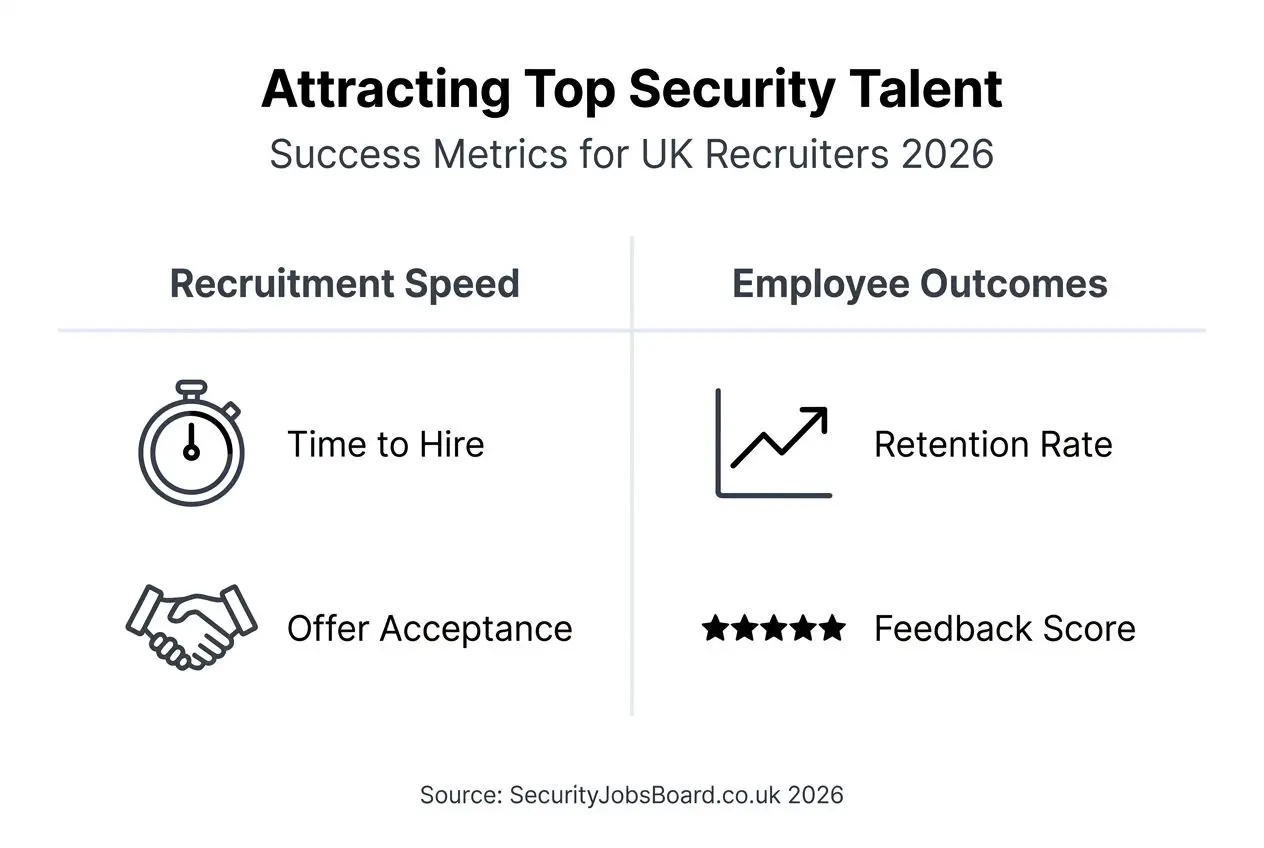
Hiring within two to three weeks improves success rates as candidates remain engaged and available. Monitor your average time from advert to offer acceptance, aiming to reduce this progressively. Track offer acceptance rates, targeting 70 percent or higher among candidates reaching final stages.
Retention improvements indicate whether your employer brand promises match actual employee experience. Development support and wellbeing initiatives can improve retention by 20 to 25 percent when implemented authentically. Measure 12-month retention rates and conduct exit interviews when staff do leave.
Candidate feedback provides direct insight into employer brand strength. Survey applicants about their recruitment experience regardless of outcome. Positive feedback signals strong brand perception whilst criticism highlights improvement opportunities.
| Metric | Baseline Target | Excellence Target |
|---|---|---|
| Time to Hire | Under 3 weeks | Under 2 weeks |
| Offer Acceptance Rate | 60 to 70% | Over 75% |
| 12-Month Retention | 70 to 80% | Over 85% |
| Candidate Experience Score | 7 out of 10 | 8.5 out of 10 |
Set realistic benchmarks recognising that improvement takes time. Initial changes might show modest gains, with compounding effects emerging as your employer brand strengthens and word spreads among security professionals.
Regular review of candidate experience metrics ensures continuous improvement whilst demonstrating ROI from talent attraction investments to leadership stakeholders.
Discover top UK security jobs and career advice
Whether you’re recruiting exceptional security talent or advancing your own career, SecurityJobsBoard.co.uk connects you with specialist opportunities across the UK. Our platform features targeted listings from Northern Ireland security jobs to roles throughout England, Scotland, and Wales.

Employers access qualified candidates actively seeking positions aligned with their skills and career goals. Jobseekers discover vacancies from organisations genuinely committed to professional development and positive workplace culture. Explore our security job career advice section for expert guidance on everything from CV writing to interview preparation and career progression strategies.
FAQ
How important is flexible working for attracting security talent?
Flexible working is now a baseline expectation for most UK security professionals, significantly broadening the talent pool beyond local candidates. It improves both attraction and retention by meeting fundamental work-life balance needs. Employers offering genuine flexibility gain competitive advantage in a crowded market.
What salary level attracts top security professionals in 2026?
Salaries should reflect rising security risks and market demand, benchmarking against current industry standards rather than historical rates. Including wellbeing benefits such as mental health support alongside competitive base pay enhances overall package appeal to candidates evaluating multiple offers.
How quickly should I make hiring decisions?
Hiring decisions made within two weeks significantly increase offer acceptance rates among top candidates who typically receive multiple opportunities. Delays beyond three weeks risk losing applicants to faster competitors, so streamline approval processes and empower hiring managers appropriately.
Why is employer branding critical for security firms?
Authentic branding with real employee stories attracts candidates prioritising culture and meaningful work over generic corporate messaging. It differentiates your firm in the competitive UK security sector where qualified professionals evaluate potential employers based on values alignment and growth prospects.
Recommended
- Optimising Security Job Searches for Fast UK Career Moves
- 7 Key Security Job Trends in the UK for 2025 Explained
- UK Security Recruitment Trends 2025: 6.2% Growth Rate
- 7 Essential Security Job Hunting Tips for 2025 UK Seekers
- Master the cybercrime investigation process in the UK 2026
- Comprendere le tendenze della sicurezza sul lavoro 2025 - Sikuro


