Optimising Job Listings for Top Security Talent

British security companies face growing competition, with over 60 percent struggling to attract high-calibre talent in a rapidly evolving sector. For HR managers and recruitment officers, every vacancy can impact both operational safety and reputation. By refining your approach to job listings, you address key challenges and set the stage to engage experienced candidates who fit your unique security needs.
Table of Contents
- Step 1: Analyse the Role Requirements
- Step 2: Craft Clear and Compelling Job Titles
- Step 3: Structure Essential and Appealing Job Details
- Step 4: Incorporate Relevant Security Keywords
- Step 5: Review and Test Listing Performance
Quick Summary
| Key Point | Explanation |
|---|---|
| 1. Define Role Requirements Clearly | Conduct a comprehensive analysis of security roles to attract the right candidates and understand specific skill needs. |
| 2. Create Compelling Job Titles | Use specific and appealing job titles to accurately reflect the responsibilities and attract ideal candidates. |
| 3. Structure Job Details Effectively | Organise job descriptions into clear sections, enhancing readability and effectively communicating role expectations. |
| 4. Use Relevant Security Keywords | Integrate specific industry terminology for improved visibility and to connect with suitable security professionals searching for jobs. |
| 5. Regularly Review Job Listing Performance | Monitor metrics such as application rates and candidate quality to refine listings for attracting top security talent. |
Step 1: Analyse the Role Requirements
Defining precise role requirements forms the cornerstone of attracting top security talent. The process demands strategic thinking and a comprehensive understanding of security sector dynamics. When crafting job listings, you need to break down the specific skills, qualifications, and responsibilities that will help you identify the most qualified candidates.
Start by conducting a thorough analysis of the security position using industry frameworks. Professional security frameworks from the Security Institute recommend examining roles across multiple dimensions including personnel security, cyber security, and technical security capabilities. This means going beyond generic job descriptions and creating a nuanced profile of the exact skills and competencies required. Consider the specific technical skills, certifications, and experience levels that align with your organisation’s security infrastructure and strategic objectives. For instance, a cybersecurity analyst role might require specific skills in threat monitoring, vulnerability assessment, and incident response.
Comprehensive role analysis involves collaboration between HR, operational teams, and existing security professionals. They can provide insights into the practical requirements of the role, helping you craft a job listing that speaks directly to the most qualified candidates. Understand the day-to-day responsibilities, technical challenges, and strategic expectations of the position to create a compelling and accurate job description.
Pro Tip: Consult with current high-performing security professionals in similar roles to gain granular insights into the skills and attributes that truly make a difference in security job performance.
The following table summarises critical factors to consider during security role analysis and their impact on candidate attraction:
| Factor | Why It Matters | Business Impact |
|---|---|---|
| Technical Skills | Aligns with job responsibilities | Ensures candidates fit real tasks |
| Collaboration | Involves HR and experts | Captures both strategic and practical needs |
| Certifications | Sets quality benchmarks | Attracts well-qualified professionals |
| Industry Alignment | Matches sector requirements | Enhances organisation’s reputation |
Step 2: Craft Clear and Compelling Job Titles
Creating an effective job title is more than just a labelling exercise its a critical strategy for attracting top security talent. Your job title serves as the first point of engagement for potential candidates, acting as a crucial marketing tool that can significantly influence who applies to your position.
Job titles in the UK cybersecurity sector must strike a delicate balance between precision and appeal. Start by accurately reflecting the role’s core responsibilities and seniority level. For example, instead of using generic terms like “Security Professional,” opt for more specific descriptors such as “Senior Cyber Security Analyst,” “Network Defence Specialist,” or “Information Security Consultant.” These titles provide immediate clarity about the role’s technical focus, expected experience level, and organisational positioning. Drawing insights from recent cybersecurity summit research, effective titles should communicate the specific skills and expertise required, helping qualified candidates quickly determine if the role matches their professional profile.

When crafting your job title, consider the keywords that top security professionals might use when searching job platforms. Incorporate industry standard terminology that reflects current technological trends and specific security domains. This approach not only improves your listing’s searchability but also demonstrates your organisation’s understanding of contemporary security challenges.
Professional Advice: Consult with your current security team to validate the job title, ensuring it accurately represents the role and attracts the right calibre of talent.
Step 3: Structure Essential and Appealing Job Details
Crafting a comprehensive and engaging job description is crucial for attracting top security talent. Your job details serve as a critical communication tool that not only outlines the role but also represents your organisation’s professionalism and understanding of security challenges.
Structured job descriptions following industry best practices should incorporate clear sections that provide transparency and depth. Begin by creating distinct segments that cover job responsibilities, required qualifications, technical skills, and organisational expectations. These sections should be formatted with consistent typography, use clear headings, and leverage bullet points to enhance readability. Drawing insights from the Security Forum’s Standard of Good Practice, ensure your job details comprehensively address current security threats, governance requirements, and compliance standards relevant to the role.
Consider including specific details that go beyond standard job requirements. Highlight unique aspects of your organisational culture, potential career progression pathways, and any specialised training or development opportunities. This approach not only provides clarity but also demonstrates your commitment to professional growth and attracts candidates who are seeking meaningful career opportunities in the security sector.
Professional Advice: Periodically review and update your job description template to reflect evolving technological landscapes and emerging security challenges.
Step 4: Incorporate Relevant Security Keywords
Keywords play a pivotal role in ensuring your security job listing reaches the right candidates and navigates through modern recruitment technologies. Strategically selected terminology can significantly improve your job posting’s visibility and attract top tier security professionals.
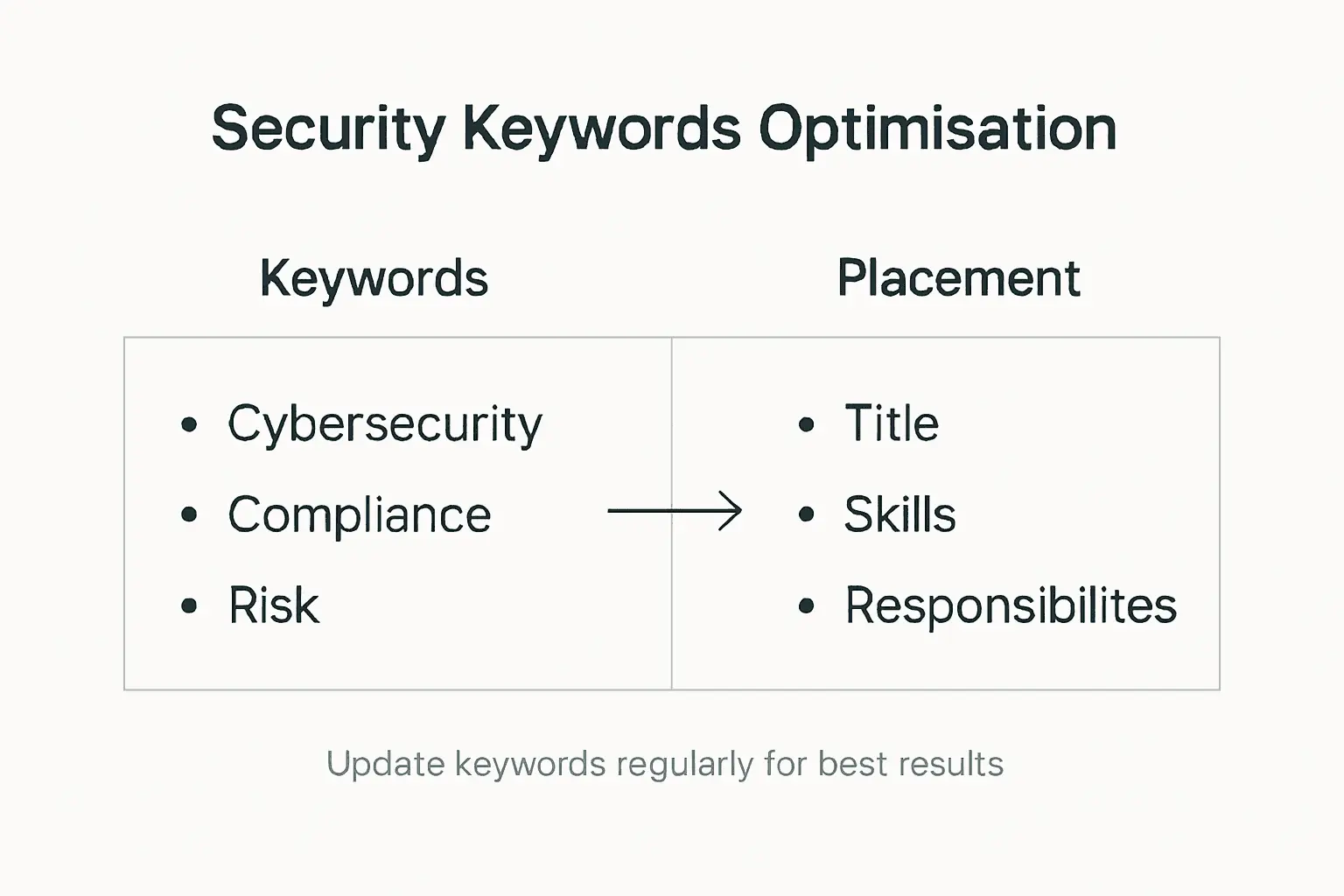
Cybersecurity job listings require precise keyword integration that reflects current industry standards. Focus on incorporating specific technical terms such as ‘risk management’, ‘network security’, ‘incident response’, ‘threat detection’, and ‘compliance’ that resonate with professional security practitioners. Drawing insights from cybersecurity hiring research, include recognised certification keywords like ‘CISSP’, ‘penetration testing’, ‘SIEM’, ‘cloud security’, and ‘ethical hacking’ to enhance your listing’s discoverability and appeal to highly qualified candidates.
Be strategic about keyword placement, ensuring they appear naturally within job responsibilities, required skills, and qualifications sections. Avoid keyword stuffing by contextualising technical terms meaningfully. Your goal is to create a job listing that speaks directly to experienced security professionals while remaining readable and engaging.
Professional Advice: Regularly update your keyword strategy to reflect emerging technological trends and evolving security landscape requirements.
Step 5: Review and Test Listing Performance
Effective job listing management requires continuous monitoring and strategic refinement to ensure you attract top security talent. Understanding how your job postings perform is crucial for developing increasingly precise recruitment strategies.
Performance management principles for recruitment recommend implementing systematic approaches to evaluate job listing effectiveness. Start by tracking key recruitment metrics such as application rates, candidate quality, time to fill positions, and diversity of applicants. Utilise A/B testing techniques to experiment with different job titles, descriptions, and keyword variations. This data driven approach allows you to understand precisely what language and presentation resonate most strongly with high calibre security professionals.
Regularly collect and analyse feedback from candidates who applied and those who did not. Pay attention to application completion rates, candidate engagement levels, and the overall quality of applicants. By systematically reviewing these insights, you can make incremental improvements to your job listings that progressively enhance your ability to attract exceptional security talent.
Here is a quick reference for monitoring and improving job listing performance in recruitment:
| Metric Monitored | What It Reveals | Improvement Action |
|---|---|---|
| Application Rate | Attractiveness of listing | Refine title and keywords |
| Candidate Quality | Suitability of applicants | Enhance detail and requirements |
| Time to Fill | Recruitment efficiency | Address bottlenecks |
| Diversity of Applicants | Appeal to wide talent pool | Adjust language inclusivity |
Professional Advice: Establish a quarterly review cycle to comprehensively assess and refine your job listing strategies based on empirical recruitment data.
Attract Top Security Talent with Precision and Ease
Optimising your job listings for the security sector demands clarity, tailored keywords, and including essential role details to truly engage qualified candidates. If you are striving to overcome challenges like crafting compelling job titles or integrating relevant security keywords you need a platform built specifically for the UK security industry that understands these unique requirements. The Security Jobs Board is designed to help employers target precisely the talent they want by providing tools that simplify role definition, keyword use, and performance analysis based on real market insights.

Unlock the potential of your recruitment process today with Security Jobs Board. Post your specialised security vacancies, reach motivated professionals quickly, and benefit from GDPR compliance alongside a user-friendly interface tailored for the sector. Visit us now and transform your hiring approach into a strategic advantage that attracts high calibre security experts efficiently and securely.
Frequently Asked Questions
How can I analyse the role requirements for a security position?
To analyse role requirements, start by detailing the specific skills, qualifications, and responsibilities needed for the position. Identify the core competencies by consulting with current security professionals and using industry frameworks, then craft a comprehensive job description that aligns with your organisation’s needs.
What are the best practices for crafting job titles in security listings?
Creating effective job titles involves being precise and appealing. Use specific descriptors that accurately reflect the role’s responsibilities and seniority level, while incorporating industry-standard terminology to enhance searchability, making it easier for the right candidates to find your listing.
What essential details should I include in a security job description?
A well-structured job description should include clear sections on job responsibilities, required qualifications, and technical skills. Ensure you highlight unique aspects of your organisation and opportunities for professional development to attract the best candidates while maintaining clarity and readability.
How do I incorporate relevant security keywords into job listings?
Incorporate specific technical terms and recognised certification keywords related to the security role. Place keywords strategically within the job responsibilities and qualifications to maximise visibility, ensuring they fit naturally into the overall description without sounding forced.
How can I measure the performance of my job listings?
Track key metrics such as application rates, candidate quality, and time to fill positions to gauge your listings’ effectiveness. Regularly collect feedback from applicants to identify areas for improvement and adjust your strategies to better attract top security talent, aiming for continuous enhancement.
What steps can I take to refine my job listings over time?
Implement a quarterly review cycle to assess and refine your job listings. Evaluate performance data and feedback to make informed adjustments, ensuring your listings remain relevant and compelling to attract high-calibre candidates.


