Role of Job Alerts for Employers: Maximising Security Recruitment

Every British security employer knows the hiring landscape is more competitive than ever. With digital recruitment moving so quickly, over 60 percent of organisations say they risk missing out on top talent without smarter search tools. Choosing the right job alert systems can be the difference between finding qualified candidates and wasting weeks on mismatched applications. Get an inside look at how automated job alerts are changing the way British employers connect with the security professionals they need.
Table of Contents
- What Are Job Alerts For Employers?
- Key Types Of Employer Job Alerts Used
- How Job Alerts Drive Security Recruitment
- Optimising Job Alerts For Quality Matches
- Legal, GDPR, And Compliance Considerations
- Common Mistakes And How To Avoid Them
Key Takeaways
| Point | Details |
|---|---|
| Job Alerts Enhance Recruitment Efficiency | Automated job alerts streamline candidate discovery and reduce time-to-hire for security employers by proactively matching candidates to organisational needs. |
| Targeted Filtering Improves Candidate Quality | By implementing sophisticated filtering mechanisms, employers can identify highly specific talent pools based on precise parameters such as qualifications and experience. |
| Compliance with Legal Standards is Essential | Security employers must ensure adherence to legal and regulatory requirements, particularly concerning data protection, to maintain transparency and fairness in recruitment. |
| Continuous Refinement is Crucial | Regularly updating job alert parameters and optimising job descriptions are vital for improving recruitment precision and ensuring alignment with evolving organisational requirements. |
What Are Job Alerts for Employers?
Job alerts represent a strategic digital recruitment tool enabling security employers to receive automated notifications about potential candidate matches and emerging talent pools. By leveraging job board services, employers can streamline their candidate discovery process and stay consistently informed about recruitment opportunities.
These automated notifications function as proactive screening mechanisms, allowing security sector recruiters to quickly identify candidates whose professional profiles align with specific organisational requirements. When integrated with platforms like the Security Jobs Board, job alerts can filter candidates based on multiple parameters such as qualifications, experience level, security clearance, and specialised skills relevant to security roles.
The core mechanics of job alerts involve sophisticated matching algorithms that compare employer-defined criteria against candidate profiles. Security organisations can set precise parameters including:
- Specific security certifications
- Years of professional experience
- Geographic location preferences
- Specialisation areas (e.g., cyber security, physical security, risk management)
- Desired qualification levels
By implementing strategic job vacancy management, employers transform passive recruitment into an active, intelligence-driven process. Rather than waiting for applications, job alerts enable proactive talent identification, reducing time-to-hire and improving overall recruitment efficiency within the competitive security sector.
Key Types of Employer Job Alerts Used
Employers in the security sector leverage multiple job alert types to optimise recruitment strategies and streamline candidate identification. Featured job email notifications represent one sophisticated approach, enabling organisations to highlight specialised or hard-to-fill security roles with enhanced visibility.
These job alert categories typically encompass several sophisticated filtering mechanisms. Targeted alerts allow employers to receive notifications based on precise candidate characteristics, including:
- Security clearance levels
- Specific professional certifications
- Geographic recruitment zones
- Specialisation domains (cyber security, physical security)
- Experience bracket matching
Moreover, job board notification services enable security employers to create nuanced alert profiles that automatically match potential candidates against organisational requirements. These intelligent systems analyse candidate profiles in real-time, providing instantaneous insights into emerging talent pools.
Sophisticated job alert systems also offer advanced segmentation capabilities. Employers can configure multi-layered alert preferences, distinguishing between urgent recruitment needs, long-term talent pipeline development, and specialist role acquisitions. By implementing these targeted notification strategies, security organisations transform traditional recruitment from a reactive process into a proactive, data-driven talent acquisition methodology.
How Job Alerts Drive Security Recruitment
Job alerts have transformed security recruitment by creating a dynamic, responsive ecosystem that connects employers with precisely matched talent. Targeted job vacancy platforms enable security organisations to broadcast opportunities to individuals with specific skill sets and professional backgrounds, dramatically reducing traditional recruitment friction.
The mechanics of job alert systems involve sophisticated algorithmic matching that considers multiple professional dimensions. These intelligent platforms analyse candidate profiles against employer requirements, creating seamless connections that traditional recruitment methods could never achieve. Key recruitment acceleration factors include:
- Instantaneous candidate notifications
- Precise skill and experience matching
- Geographic and specialisation filtering
- Real-time talent pool expansion
- Reduced time-to-hire metrics
Moreover, strategic job board notifications empower security employers to transcend conventional recruitment limitations. By leveraging automated alert systems, organisations can proactively identify candidates with niche security qualifications, security clearances, and specialised technical competencies that might otherwise remain undiscovered through traditional recruitment channels.
These advanced job alert mechanisms represent a paradigm shift in talent acquisition. Security organisations now possess unprecedented ability to curate talent pools, predict recruitment trends, and create dynamic candidate engagement strategies that respond in real-time to evolving organisational requirements. The result is a more efficient, targeted, and responsive recruitment ecosystem that benefits both employers and potential candidates.

Optimising Job Alerts for Quality Matches
Effective job alert optimisation requires a strategic approach that goes beyond basic candidate matching. Targeted vacancy highlighting services enable security employers to precisely target candidates with specific skill sets and professional backgrounds, dramatically improving recruitment precision.
To maximise job alert effectiveness, security organisations must implement sophisticated filtering mechanisms that consider multiple candidate dimensions:
- Granular skill level assessment
- Security clearance verification
- Professional certification validation
- Specialisation domain matching
- Experience bracket precision
- Geographic recruitment constraints
Detailed job description strategies play a critical role in enhancing matching accuracy. By crafting comprehensive, explicit job descriptions that articulate precise role requirements, employers can significantly improve the algorithmic matching process. This approach ensures that job alerts reach candidates whose professional profiles align closely with organisational needs.
The ultimate goal of job alert optimisation is creating a dynamic, intelligent recruitment ecosystem. Security organisations can transform traditional hiring approaches by leveraging advanced matching technologies that analyse candidate profiles with unprecedented granularity. The result is a more efficient, targeted recruitment process that reduces time-to-hire and increases the likelihood of identifying exceptional security talent.
Legal, GDPR, and Compliance Considerations
Employers utilising job alert systems must navigate a complex landscape of legal and regulatory requirements, particularly within the sensitive security recruitment sector. Job vacancy advertising regulations mandate strict protocols to prevent discriminatory practices and ensure fair, transparent recruitment processes.
Key compliance considerations for security employers implementing job alert systems include:
- Adherence to data protection principles
- Transparent candidate information handling
- Explicit consent for data processing
- Secure storage of personal information
- Regular data protection audits
- Clear communication of data usage rights
Personal data management strategies are particularly critical in the security recruitment domain. The General Data Protection Regulation (GDPR) imposes stringent requirements on how organisations collect, process, and store candidate information. Employers must implement robust mechanisms that protect individual privacy while maintaining the integrity of recruitment processes.
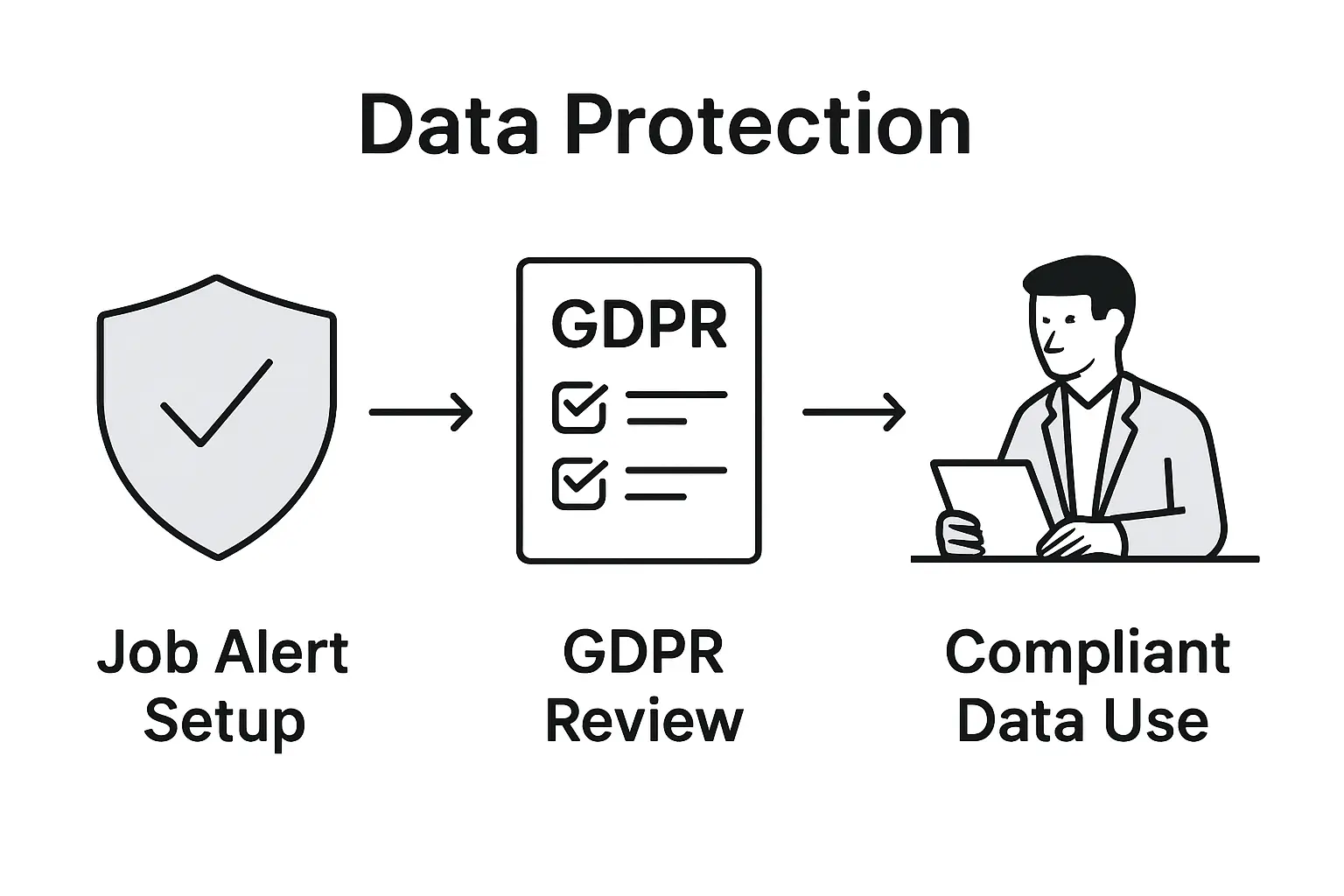
Successful navigation of legal and compliance frameworks requires a proactive, comprehensive approach. Security organisations must develop sophisticated data governance strategies that balance technological innovation with rigorous legal compliance, ensuring that job alert systems remain both efficient and legally sound. This delicate balance protects both the employer’s interests and the fundamental privacy rights of potential candidates.
Common Mistakes and How to Avoid Them
Security employers frequently encounter critical pitfalls when implementing job alert strategies that can significantly undermine recruitment effectiveness. Job description precision represents the foundational element where many organisations stumble, creating vague or overly generic postings that fail to attract targeted talent.
Most prevalent job alert implementation errors include:
- Insufficient skill specification
- Overly broad candidate filtering
- Lack of role-specific details
- Inconsistent alert frequency
- Poor algorithmic matching configurations
- Neglecting candidate experience requirements
- Failing to update job alert parameters regularly
Strategic job board utilisation demands a nuanced approach that goes beyond basic posting mechanisms. Employers must develop sophisticated alert strategies that balance technological capabilities with human insights, ensuring that recruitment technologies complement rather than replace strategic talent identification processes.
Successful job alert implementation requires continuous refinement and a deep understanding of both technological capabilities and human recruitment dynamics. Security organisations must adopt a proactive, iterative approach that treats job alerts as dynamic tools, constantly adjusting parameters, reviewing match quality, and integrating feedback loops to progressively enhance recruitment precision and effectiveness.
Harness Job Alerts to Transform Your Security Recruitment
The challenge of attracting top security talent demands more than generic postings and passive searches. As highlighted, optimising job alerts by targeting specific qualifications, experience brackets, and specialisations is essential to reduce time-to-hire and discover high-quality candidates swiftly. If you are seeking to overcome recruitment inefficiencies with a reliable, GDPR-compliant platform designed for the security industry, the Security Jobs Board offers the precise tools you need.

Explore how posting specialised security job vacancies and setting up tailored job alerts can help you pinpoint candidates matching exact criteria such as security clearances or certifications. Benefit from a platform known for its speed, quality matches, and strong connections with the UK security sector. Don’t let recruitment delays hinder your organisation’s safety and success. Visit Security Jobs Board today and experience recruitment made simple and effective.
Frequently Asked Questions
What are job alerts for employers in the security sector?
Job alerts are automated notifications that inform security employers about potential candidate matches based on specific criteria such as qualifications, experience, and specialised skills, streamlining the recruitment process.
How do job alerts help in the recruitment process?
Job alerts allow employers to proactively identify suitable candidates, enabling quicker hiring compared to traditional methods by providing real-time notifications of candidates that fit the specified job requirements.
What types of filtering mechanisms can be used in job alerts?
Employers can utilise various filtering mechanisms such as security clearance levels, professional certifications, geographical preferences, and areas of specialisation to target their job alerts effectively.
What legal considerations should be taken into account when using job alerts?
Employers must comply with data protection principles, obtain explicit consent for data processing, ensure secure storage of personal information, and conduct regular data protection audits to navigate legal and compliance requirements effectively.


