Security Job Posting Guide: Attract Top UK Candidates

Most British employers know that competition for skilled security talent is fierce. With over 300,000 licensed security professionals in the United Kingdom, standing out in the recruitment process demands a clear and strategic approach. Building an effective hiring workflow not only helps you find candidates with the right technical abilities but also ensures compliance and professionalism throughout the process.
Table of Contents
- Stage 1: Prepare Job Details And Candidate Requirements
- Stage 2: Select The Right Security Job Posting Platform
- Stage 3: Compose A Clear And Compliant Job Advert
- Stage 4: Publish And Manage Your Job Listing Online
- Stage 5: Review Applications And Verify Applicant Suitability
Quick Summary
| Key Point | Explanation |
|---|---|
| 1. Clearly define job responsibilities | Specify core responsibilities and required qualifications to attract suitable candidates for security roles. |
| 2. Use specialised job platforms | Target relevant security professionals through specialised job boards to enhance the quality of applications. |
| 3. Ensure transparency in job adverts | Provide clear, specific examples of responsibilities and requirements to manage applicant expectations effectively. |
| 4. Monitor and manage applications actively | Regularly review applicant progress and maintain prompt communication to streamline the recruitment process. |
| 5. Implement fair applicant screening | Use structured assessments and verify qualifications to ensure compliance with legal standards and candidate suitability. |
Stage 1: Prepare job details and candidate requirements
Crafting a robust job description for security positions requires precision and strategic thinking. Your goal is to attract qualified candidates who not only meet the technical requirements but also align with the specific needs of your security role.
Start by clearly defining the core responsibilities and essential qualifications. Pre-employment vetting guidance emphasises conducting checks proportionately and legally. This means documenting specific skills such as customer service abilities, patience, and understanding of public safety protocols. For most security roles, candidates must possess a valid Security Industry Authority (SIA) licence, which legally permits them to work in various security positions.
When outlining candidate requirements, be explicit about both technical and soft skills. Security professionals need strong observational capabilities, physical fitness, and the ability to remain calm under pressure. Your job posting should specify required certifications, minimum experience levels, and any specialised training needed for the specific security context. A well-constructed job description not only attracts suitable candidates but also helps filter out unsuitable applicants early in the recruitment process.

Pro tip: Always verify that your job requirements comply with current employment legislation and do not inadvertently discriminate against potential candidates. Your posting should focus on genuine job-related competencies.
Stage 2: Select the right security job posting platform
Choosing an appropriate platform for advertising your security job vacancy can significantly impact the quality and quantity of candidate applications. Your selection strategy should focus on reaching the most relevant and qualified security professionals in the United Kingdom.
Begin by exploring specialised security job boards that cater specifically to your industry. While job search engines like Adzuna provide broad aggregation of listings, niche security job portals offer more targeted reach. These platforms understand the unique requirements of security roles and attract candidates with precise skill sets. Consider factors such as platform user base, industry reputation, ease of posting, and candidate filtering capabilities.
Evaluate each platform based on its specific advantages for security recruitment. Some job boards specialise in security sector candidates, offering advanced screening tools and direct access to professionals with SIA licensing and relevant certifications. Compare pricing, reach, and the quality of candidate profiles. A strategic approach involves using a combination of specialised security job boards and broader recruitment platforms to maximise your potential candidate pool.
Pro tip: Always track the performance of your job postings across different platforms. Monitor metrics like application quality, candidate relevance, and time to hire to continuously refine your recruitment strategy.
Stage 3: Compose a clear and compliant job advert
Crafting an effective job advertisement for security roles requires precision, clarity, and strategic communication. Your goal is to attract the most suitable candidates while ensuring legal compliance and setting clear expectations for potential applicants.
Government recruitment guidance emphasises the importance of providing specific examples and essential criteria in job adverts. When composing your security role advertisement, focus on articulating precise job responsibilities, required qualifications, and key performance expectations. Security clearance requirements should be transparently outlined to ensure candidates understand the role’s prerequisites and eligibility conditions.
Ensure your job advert includes comprehensive details such as specific security certifications, physical fitness requirements, shift patterns, and any specialised skills needed for the position. Be explicit about technical competencies, communication skills, and professional standards expected in the security sector. Your language should be professional yet engaging, avoiding unnecessary jargon while providing a clear picture of the role and organisational expectations.
Pro tip: Always review your job advert for potential unconscious bias and ensure the language is inclusive, welcoming qualified candidates from diverse backgrounds while maintaining the specific professional standards required for the security role.
Stage 4: Publish and manage your job listing online
Successfully publishing your security job listing requires strategic selection of online platforms and careful management of the recruitment process. Your approach should balance visibility, targeted reach, and efficient candidate screening.
Early recruitment platforms like JobServe revolutionised online job postings, and today’s digital landscape offers multiple channels for reaching security professionals. Online job posting strategies have evolved to provide employers with sophisticated tools for reaching targeted candidates. Select platforms that specialise in security recruitment, ensuring your listing reaches professionals with the specific skills and certifications required for your role.
When managing your online job listing, regularly monitor applications, respond promptly to candidate inquiries, and maintain a professional communication standard. Consider using platforms that offer applicant tracking systems, which help streamline the recruitment process by allowing you to categorise, rank, and communicate with potential candidates efficiently. Keep your job listing active and update it periodically to reflect any changes in role requirements or organisational needs.
Pro tip: Always ensure your online job listing is mobile friendly, as many security professionals use smartphones and tablets to search and apply for positions.
Stage 5: Review applications and verify applicant suitability
Screening and selecting the right security candidates requires a methodical and comprehensive approach that balances thoroughness with legal compliance. Your primary objective is to identify the most qualified professionals who meet both technical competencies and organisational standards.
Pre-employment vetting guidelines emphasise conducting checks that are proportionate and legally justified. Carefully review each application against your predefined criteria, focusing on specific skills, qualifications, and security clearance levels relevant to the role. Candidate security guidance provides valuable insights into the standards and expectations candidates should meet in security roles.
Implement a structured assessment process that includes verifying professional credentials, conducting background checks, and evaluating candidate references. Pay close attention to details such as SIA licensing, previous security experience, physical fitness certifications, and any specialised training relevant to the specific security position. Develop a scoring system that objectively ranks candidates based on their alignment with job requirements.
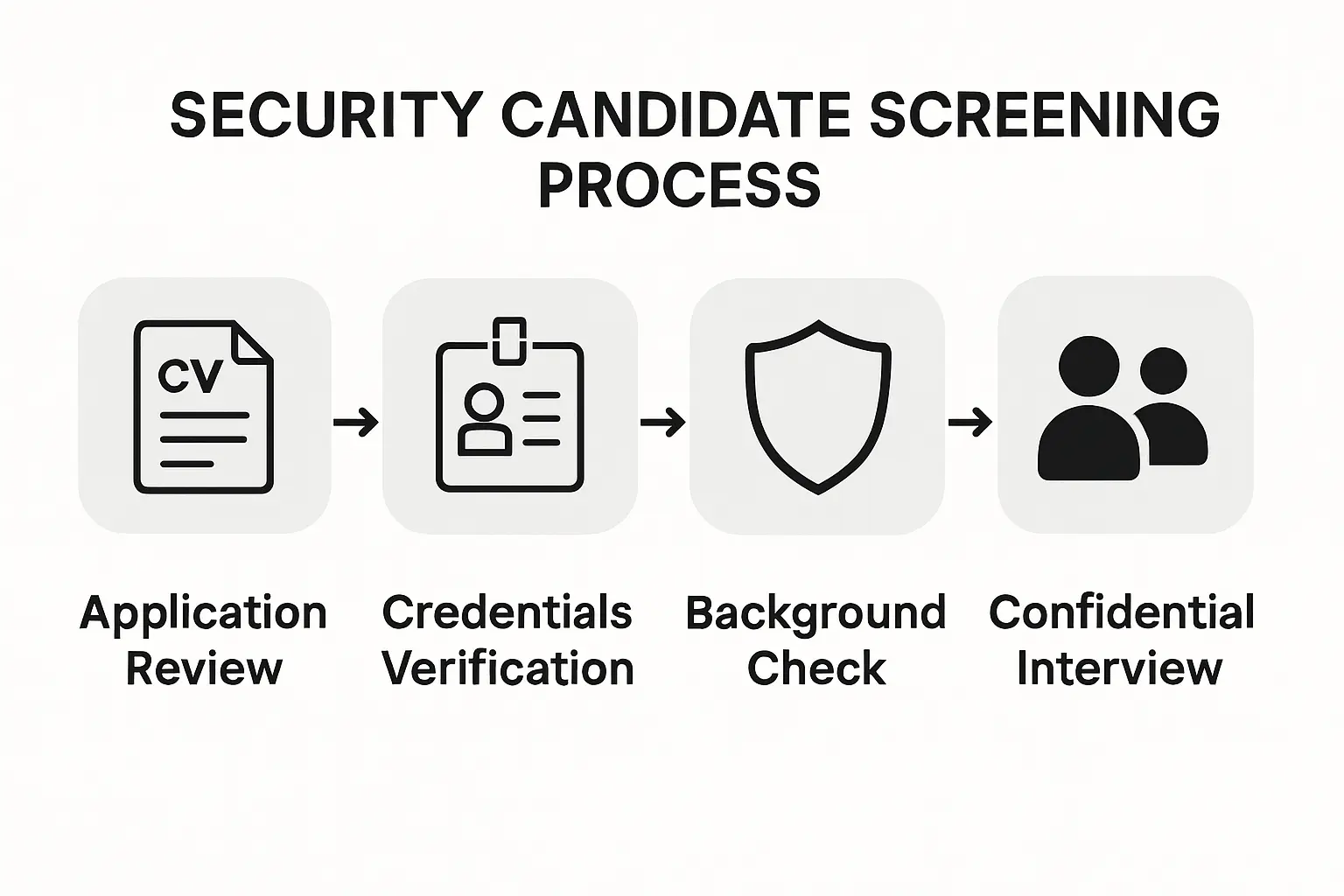
Pro tip: Always maintain strict confidentiality during the screening process and ensure all candidate information is handled in compliance with data protection regulations.
Streamline Your Security Recruitment with Expert Support
Finding the perfect match for your security role can feel overwhelming. The article highlights crucial challenges such as crafting clear job adverts, selecting specialised job boards, and ensuring compliance with vetting and licensing requirements like the SIA licence. You want to attract qualified candidates who meet your technical and professional standards, while managing postings efficiently and securely.
At Security Jobs Board, we understand these pain points and provide a tailored solution designed exclusively for UK security employers. Our platform simplifies the entire hiring process with mobile-friendly job posting, GDPR-compliant candidate screening, and direct access to professionals verified for essential qualifications. Whether you are preparing job details or reviewing applications, our trusted site offers the tools to save time and reduce uncertainty.
Are you ready to connect with top security talent fast and confidently on a trusted, specialised platform?

Post your security jobs today on Security Jobs Board and transform your recruitment approach. Visit the site now to see how focused, compliant job adverts and high-quality candidate matches can be achieved with ease.
Frequently Asked Questions
How do I create an effective job description for a security role?
To create an effective job description for a security role, start by clearly defining the core responsibilities and essential qualifications. Specify both technical and soft skills required for candidates, such as SIA licensing, observational abilities, and communication skills.
What platforms are best for posting security job vacancies?
The best platforms for posting security job vacancies include specialised security job boards that cater to your industry. Consider using a combination of niche platforms and broader recruitment sites to maximise your reach and attract qualified candidates.
How can I ensure my job advert complies with legal requirements?
To ensure your job advert complies with legal requirements, focus on providing clear examples and criteria that are genuinely related to the job. Review your advert for potential biases and use inclusive language to welcome candidates from diverse backgrounds.
What should I include in my job listing to attract suitable candidates?
Your job listing should include comprehensive details such as specific security certifications, physical fitness requirements, and shift patterns. Be explicit about the essential qualifications and key responsibilities to attract the right candidates.
How do I screen and verify candidates for a security position?
To screen and verify candidates for a security position, implement a structured assessment process that includes reviewing applications against predefined criteria. Verify professional credentials, conduct background checks, and evaluate references to ensure compliance and suitability.
How can I track the performance of my job postings?
You can track the performance of your job postings by monitoring key metrics such as application quality, candidate relevance, and time to hire. Regularly analyse these metrics to refine your recruitment strategy and improve future postings.


