Security Audit Explained: Best Practices for the UK

Over £3 billion was lost to UK cybercrime in just one year, highlighting the urgent need for robust security measures. With threats evolving rapidly, organisations face growing pressure to prove their systems are secure and fully compliant with complex laws. Understanding security audits gives businesses a clear path to spot hidden risks, protect sensitive data, and build lasting trust with clients and regulators.
Table of Contents
- Defining Security Audits In The UK Context
- Types Of Security Audits And Key Differences
- How Security Audits Work Step-By-Step
- Legal Standards And Regulatory Compliance
- Roles And Responsibilities During Audits
- Risks, Liabilities, And Common Pitfalls
Key Takeaways
| Point | Details |
|---|---|
| Comprehensive Assessments Required | Security audits must evaluate not just compliance, but also technological vulnerabilities and regulatory adherence to enhance organizational security. |
| Collaboration is Key | Successful audits rely on cooperation between security teams and IT departments to ensure a thorough and strategic evaluation of security measures. |
| Understanding Regulatory Frameworks | Auditors must be well-versed in UK legal standards such as GDPR and the Data Protection Act 2018 to ensure systemic compliance during assessments. |
| Continuous Monitoring Essential | Organizations should view security audits as ongoing processes rather than one-time events to effectively manage and mitigate potential risks. |
Defining Security Audits in the UK Context
A security audit is a systematic evaluation of an organisation’s information systems, security policies, and operational procedures to identify potential vulnerabilities and ensure compliance with established standards. According to the UK Government Security Profession, these assessments are critical for verifying that cyber security controls are implemented effectively and align with comprehensive risk management strategies.
The core objective of a security audit in the UK context goes beyond simple checklist compliance. Key components typically include:
- Thorough assessment of existing security infrastructure
- Identification of potential technological and procedural weaknesses
- Evaluation of legal and regulatory adherence
- Comprehensive risk analysis
- Detailed reporting for both technical and management stakeholders
Professionals conducting these audits must possess a nuanced understanding of UK-specific regulatory frameworks. The National Cyber Security Centre (NCSC) emphasizes that effective security audits require translating complex technical findings into clear, actionable insights that senior management can understand and act upon. This means auditors aren’t just technical experts but also skilled communicators who can bridge the gap between intricate security protocols and strategic business decision-making.
Understanding the strategic importance of security audits is crucial for organisations operating in today’s complex digital landscape. For more insights into related security processes, check out our security screening overview.
Types of Security Audits and Key Differences
Security audits encompass various specialized approaches designed to comprehensively assess an organisation’s security posture. According to GeeksforGeeks, these audits can be categorized into distinct types, each serving a unique purpose in identifying and mitigating potential security risks.
The primary types of security audits include:
- Configuration Audits: Verify system settings and ensure they align with best practices
- Vulnerability Audits: Systematically identify potential security weaknesses
- Compliance Audits: Ensure adherence to legal and regulatory requirements
- Performance Audits: Evaluate the efficiency and effectiveness of existing security controls
ISec Tech further elaborates on the audit landscape, highlighting additional critical variations. External audits conducted by independent third parties offer an objective assessment, while internal audits provide an in-depth review from within the organisation. Financial cybersecurity audits focus specifically on protecting sensitive financial data, offering a targeted approach to security assessment.
The most effective security audit strategies combine multiple audit types to create a comprehensive security evaluation.
 By understanding the nuanced differences between these audit approaches, organisations can develop a robust and adaptive security framework that addresses potential vulnerabilities across technical, operational, and regulatory domains. For professionals looking to delve deeper into security processes, our security vetting overview provides additional insights into comprehensive security assessments.
How Security Audits Work Step-by-Step
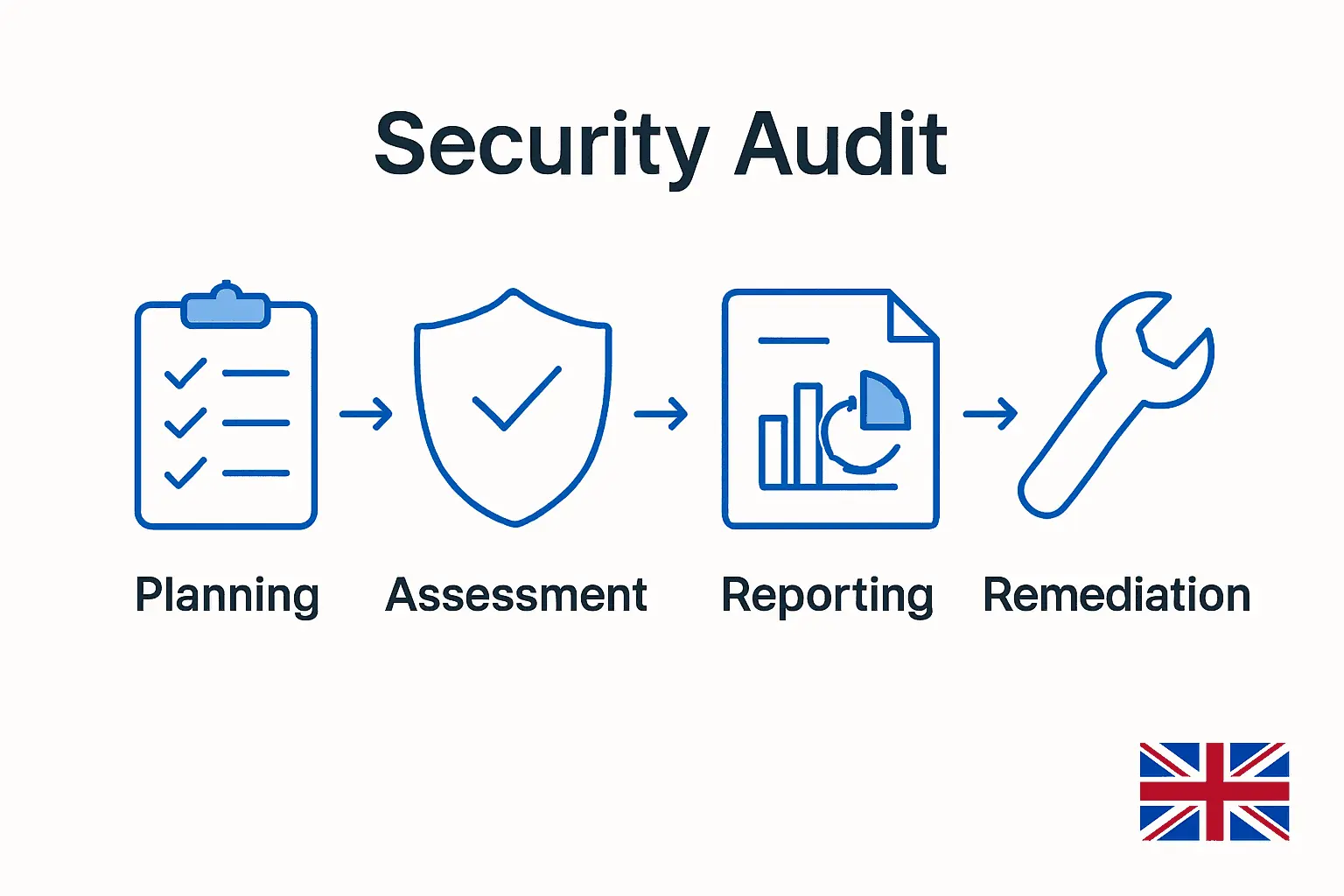
Security audits follow a structured methodology designed to systematically evaluate an organisation’s security infrastructure. According to GeeksforGeeks, the process typically unfolds through four critical stages: planning, assessment, reporting, and remediation.
The step-by-step process involves:
-
Planning Stage: Defining audit scope and objectives
- Identifying systems and assets to be assessed
- Establishing evaluation criteria
- Determining audit methodology
- Assembling the audit team
-
Assessment Stage: Comprehensive security evaluation
- Conducting vulnerability scans
- Reviewing security configurations
- Testing existing security controls
- Identifying potential weaknesses and risks
UK Government Security emphasizes that successful security testing requires close collaboration between security and IT departments. This collaborative approach ensures a holistic assessment that goes beyond technical checks, incorporating organisational context and strategic insights.
The final stages involve generating detailed reports with actionable recommendations and implementing necessary improvements. For professionals seeking deeper insights into related security processes, our security checks guide offers additional valuable information about comprehensive security evaluations.
Legal Standards and Regulatory Compliance
Legal standards and regulatory compliance form the critical backbone of security audits in the United Kingdom, establishing essential frameworks that organisations must navigate carefully. According to the UK Government Security guidance, Cyber Security Audit and Assurance professionals are required to have a comprehensive understanding of data protection and privacy regulations, ensuring systematic compliance during security assessments.
Key regulatory frameworks that security audits must address include:
- General Data Protection Regulation (GDPR): Governing data privacy and protection
- Data Protection Act 2018: UK’s implementation of GDPR principles
- Computer Misuse Act 1990: Addressing unauthorized computer access
- Network and Information Systems (NIS) Regulations: Protecting critical infrastructure
- Privacy and Electronic Communications Regulations (PECR): Regulating electronic communications
The National Cyber Security Centre (NCSC) emphasizes the critical nature of verifying compliance against established security policies and legal requirements. This involves not just checking boxes, but developing a nuanced understanding of how legal standards translate into practical security measures. Organisations must demonstrate they are actively protecting sensitive information, maintaining robust security controls, and responding effectively to potential vulnerabilities.
Navigating these complex legal landscapes requires continuous education and adaptive strategies. Security professionals must stay updated on evolving regulations and interpret them within the specific context of each organisation. For professionals seeking to deepen their understanding of related security processes, our security vetting overview provides additional valuable insights into comprehensive security assessments.
Roles and Responsibilities During Audits
Security audits require a collaborative ecosystem of professionals, each playing a critical role in ensuring comprehensive assessment and protection. According to the UK Government Security guidance, Cyber Security Audit and Assurance professionals must possess a multifaceted skill set that goes beyond technical expertise.
Key roles in the security audit process include:
- Security Auditors: Lead the assessment, identifying vulnerabilities
- IT Department: Provide technical access and system insights
- Compliance Officers: Ensure regulatory alignment
- Senior Management: Approve strategic recommendations
- Data Protection Specialists: Validate privacy protocols
UK Government Security emphasizes that successful security testing demands seamless collaboration between security teams and IT departments. This means moving beyond traditional departmental boundaries, creating a unified approach to identifying and mitigating potential security risks.
Effective audit teams must balance technical proficiency with strategic communication skills. Auditors are not just technical investigators, but translators who can communicate complex security findings to both technical staff and general management. For professionals seeking to understand the broader context of security processes, our security screening overview offers additional valuable insights into comprehensive security assessments.
Risks, Liabilities, and Common Pitfalls
Security audits are critical safeguards, but they are not without potential challenges that can undermine their effectiveness. According to Cyberly, neglecting comprehensive security audits can expose organisations to significant risks, including costly data breaches, severe reputational damage, and substantial legal consequences.
Common pitfalls that organisations must vigilantly avoid include:
- Inadequate Audit Scope: Failing to comprehensively assess all critical systems
- Limited Expertise: Using auditors without specialized security knowledge
- Incomplete Vulnerability Remediation: Identifying risks without implementing solutions
- Poor Documentation: Inconsistent or superficial reporting of security findings
- Lack of Continuous Monitoring: Treating security audits as one-time events
ISec Tech reinforces the critical nature of these potential risks, highlighting that neglecting cybersecurity audits can lead to devastating organizational consequences. The financial and reputational impact of a security breach can far outweigh the cost of conducting thorough, regular security assessments.
Mitigating these risks requires a proactive, comprehensive approach to security auditing. Organisations must develop robust frameworks that emphasize continuous improvement, expert involvement, and strategic vulnerability management. For professionals seeking deeper insights into related security processes, our security vetting overview offers additional valuable perspectives on comprehensive security strategies.
Strengthen Your Security Career with Expert Insights and Opportunities
Understanding the complexities of security audits in the UK reveals just how vital it is to have skilled professionals who grasp regulatory compliance, risk management and technical evaluations. If you are passionate about security or responsible for protecting organisational assets from evolving threats this knowledge is essential. The challenges of executing thorough audits and bridging the gap between technical findings and business decisions call for dedicated experts with the right credentials and experience.

Take control of your security career today by joining Security Jobs Board where you can explore tailored job opportunities aligned with your audit expertise and ambitions. Benefit from a platform designed to connect you quickly and securely with employers seeking specialists in security audit, compliance and risk roles. Stay ahead in a competitive market by creating your profile, uploading your CV and setting up alerts at no cost. Don’t wait until vulnerabilities turn into costly problems act now to advance your career and contribute to safer organisations through security vetting insights and security screening guidance that complement your audit expertise.
Frequently Asked Questions
What is a security audit?
A security audit is a systematic evaluation of an organization’s information systems, security policies, and procedures to identify potential vulnerabilities and ensure compliance with established standards.
What are the types of security audits?
Common types of security audits include configuration audits, vulnerability audits, compliance audits, and performance audits, each designed to assess various aspects of an organization’s security posture.
How do security audits work?
Security audits typically follow a step-by-step process involving planning, assessment, reporting, and remediation to evaluate an organization’s security infrastructure comprehensively.
Why are legal standards and regulatory compliance important in security audits?
Legal standards and regulatory compliance ensure that security audits address key frameworks like GDPR and the Data Protection Act, helping organizations to effectively protect sensitive information and avoid legal repercussions.


