Fire Security Jobs: Everything You Need to Know

Fire incidents in the UK cause billions in damages every year, highlighting just how vital fire security professionals have become across every industry. Demand for skilled experts who can prevent and respond to fire risks keeps rising as businesses and communities work to protect people and property. Understanding what fire security jobs involve helps you see the growing opportunities, the varied roles on offer, and what skills or qualifications this rewarding sector requires.
Table of Contents
- Defining Fire Security Jobs UK
- Types Of Fire Security Roles
- Qualifications And Legal Requirements
- Core Duties And Working Principles
- Risks And Compliance Responsibilities
- Career Paths And Advancement
Key Takeaways
| Point | Details |
|---|---|
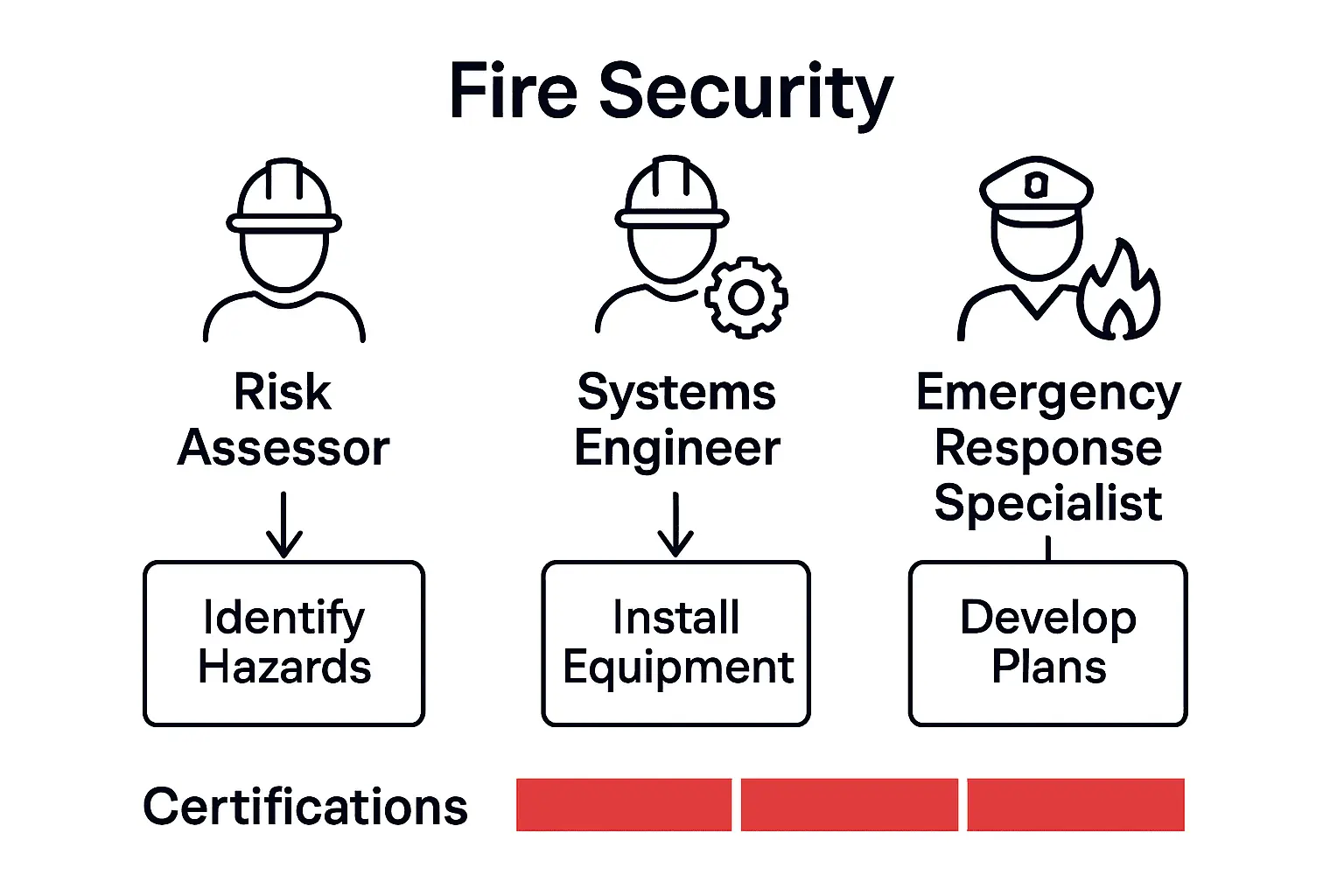
| Diverse Responsibilities | Fire security jobs encompass various specialized roles, including risk assessment, system design, and emergency response planning, crucial for protecting lives and property. |
| Essential Qualifications | Professionals typically require certifications in fire safety, risk management, and must adhere to regulatory compliance and continuous training standards. |
| Career Advancement | Opportunities for progression include technical specialization, management roles, and consultancy, supported by ongoing education and professional development. |
| Risk Management Focus | Effective fire security professionals prioritize proactive risk management, comprehensive assessments, and adherence to safety regulations to mitigate potential hazards. |
Defining Fire Security Jobs UK
Fire security jobs represent a critical sector within the UK’s professional safety landscape, focused on preventing, detecting, and responding to potential fire-related risks. According to the Fire Industry Association, these roles encompass a diverse range of responsibilities designed to protect lives, property, and organisational assets.
Professionals in this field typically engage in multiple specialized functions, which can include:
- Fire Risk Assessment: Conducting comprehensive evaluations of buildings and facilities
- Fire System Design: Creating strategic protection frameworks for different environments
- Equipment Installation: Setting up advanced fire detection and suppression systems
- Emergency Response Planning: Developing protocols for potential fire scenarios
The Fire Protection Association highlights that fire security professionals must possess a unique blend of technical knowledge, analytical skills, and strategic thinking. These experts are responsible for understanding complex fire safety regulations, implementing cutting-edge technologies, and ensuring compliance with stringent UK safety standards.
Most fire security roles require specific qualifications, which might include certifications in fire engineering, risk management, or specialized safety credentials.
 Professionals often work across various sectors such as commercial buildings, industrial facilities, public infrastructure, and residential complexes, making this career path both dynamic and essential for maintaining public safety.
For those interested in exploring more about security sector opportunities, check out our comprehensive guide to security sector jobs UK.
Types Of Fire Security Roles
Fire security roles encompass a wide range of specialized positions critical to public and private sector safety. Prospects highlights that fire risk assessors play a pivotal role in identifying potential hazards, evaluating risks, and providing crucial prevention recommendations to ensure regulatory compliance.
Key fire security roles include:
- Fire Risk Assessors: Professionals who systematically evaluate building safety and potential fire hazards
- Fire Systems Engineers: Design and implement advanced fire protection technologies
- Emergency Response Specialists: Develop and coordinate comprehensive fire emergency protocols
- Fire Safety Trainers: Educate organisations about fire prevention and safety procedures
- Fire Protection Consultants: Provide strategic advice on fire safety management
Some roles offer unique employment models, such as retained firefighters, who Wikipedia describes as part-time emergency responders maintaining other employment while being ready to respond to critical situations. This model is particularly prevalent in rural areas, offering flexibility and community-focused emergency response.
Professionals in fire security typically require a combination of technical qualifications, practical experience, and specialized certifications. Many roles demand advanced training in fire engineering, risk management, and safety regulations.
Individuals can specialize across various sectors including commercial, industrial, public infrastructure, and residential environments.
To explore more about potential career paths in this dynamic field, check out our guide on 7 career paths in security.
Qualifications And Legal Requirements
Pursuing a career in fire security demands a comprehensive approach to professional qualifications and legal compliance. According to the Security Industry Authority, professionals in this field must obtain specific licenses that require rigorous training in critical areas including fire safety, emergency response protocols, and risk management.
Key qualifications typically include:
- Professional Certifications: Advanced diplomas in fire engineering and safety management
- Security Licensing: Mandatory SIA certification for certain fire security roles
- First Aid Qualifications: Emergency response and medical intervention credentials
- Technical Training: Specialized courses in fire detection systems and risk assessment
- Health and Safety Diplomas: Comprehensive understanding of workplace safety regulations
The Fire Industry Association provides critical training and certification programs that ensure professionals meet stringent industry standards. These programs cover essential skills such as risk evaluation, emergency planning, fire prevention technologies, and legal compliance frameworks.
Legal requirements in fire security are particularly stringent, with professionals needing to demonstrate continuous professional development and updated knowledge of changing safety regulations. Most employers require background checks, physical fitness assessments, and ongoing training to maintain professional credentials. Specializations often demand additional technical certifications and practical experience in managing complex fire safety environments.
For those looking to navigate the complex landscape of security career development, our comprehensive guide on 7 career paths in security offers valuable insights into professional progression.
Core Duties And Working Principles
Fire security professionals operate at the critical intersection of prevention, preparedness, and emergency response. Prospects emphasizes that fire risk assessors fundamentally focus on identifying potential hazards, systematically assessing risks, and providing strategic prevention recommendations to ensure comprehensive safety compliance.
Core operational principles include:
- Proactive Risk Management: Continuously identifying and mitigating potential fire hazards
- Comprehensive Assessment: Conducting detailed evaluations of physical environments
- Technical Expertise: Implementing advanced fire detection and prevention technologies
- Regulatory Compliance: Ensuring adherence to current fire safety legislation
- Emergency Preparedness: Developing robust response protocols for potential incidents
Specialized roles like retained firefighters, as Wikipedia describes, demonstrate the versatile nature of fire security work. These professionals balance emergency response duties with other employment, providing critical community fire safety services while maintaining flexible work arrangements.
Professionals in this field must maintain a holistic approach, combining technical knowledge, analytical skills, and practical problem-solving. Their responsibilities extend beyond immediate fire prevention, encompassing ongoing education, risk communication, and strategic planning to protect lives and property. Success requires continuous learning, adaptability, and a commitment to maintaining the highest standards of safety and professional excellence.
To gain deeper insights into potential career trajectories, explore our guide on 7 career paths in security.
Risks And Compliance Responsibilities
In fire security, managing professional risks and maintaining stringent compliance are paramount responsibilities that demand constant vigilance and strategic planning. Wikipedia highlights the unique challenges faced by lone workers in fire security, who must navigate potentially isolated working environments while adhering to comprehensive health and safety regulations.
Key risk management strategies include:
- Personal Safety Protocols: Implementing robust communication and tracking systems
- Equipment Verification: Regular inspection and maintenance of safety gear
- Emergency Response Planning: Developing comprehensive contingency procedures
- Risk Assessment Documentation: Systematic recording and evaluation of potential hazards
- Continuous Training: Regular upskilling in safety techniques and legal requirements
The Fire Protection Association provides critical guidance in understanding and navigating the complex landscape of fire safety compliance. Professionals must remain proactive in identifying potential risks, developing mitigation strategies, and ensuring that all operational procedures align with current legislative standards.
Compliance responsibilities extend beyond mere technical adherence, requiring a holistic approach that integrates legal requirements, ethical considerations, and professional best practices. Fire security professionals must consistently demonstrate an understanding of evolving regulations, maintain meticulous documentation, and prioritize both individual and collective safety across diverse working environments.
To explore more about navigating complex professional landscapes, check out our guide on 7 career paths in security.
Career Paths And Advancement
Career progression in fire security offers dynamic and multifaceted opportunities for professionals committed to safety and continuous development. Prospects reveals that fire risk assessors can significantly advance their careers by specializing in specific areas, moving into senior management roles, or transitioning into lucrative consultancy positions, with salaries progressively increasing alongside professional experience.
Potential career advancement trajectories include:
- Technical Specialization: Focusing on fire engineering, risk management, or advanced prevention technologies
- Management Progression: Moving into senior leadership and strategic safety planning roles
- Consultancy Pathways: Becoming independent fire safety advisors for various industries
- Training and Education: Developing expertise as professional fire safety instructors
- Regulatory Compliance Specialists: Becoming experts in safety legislation and industry standards
The Fire Industry Association provides critical professional development opportunities, offering training and certification programs that support systematic career advancement. These resources enable professionals to continuously enhance their skills, stay updated with emerging technologies, and build a robust professional network.
Successful career progression in fire security demands a strategic approach that combines technical proficiency, continuous learning, and adaptability. Professionals must invest in ongoing education, seek mentorship, obtain advanced certifications, and remain proactive in understanding evolving industry trends and technological innovations.
To explore more about potential career trajectories, check out our guide on 7 career paths in security.
Take Charge of Your Fire Security Career with Confidence
Navigating the complex world of fire security jobs means understanding rigorous qualifications, compliance demands, and the need for continuous professional development. Whether you are aiming to specialise as a fire risk assessor or seek advancement into consultancy or management, finding the right opportunity to match your skills and ambitions can be challenging. The Security Jobs Board is here to solve that problem by connecting you directly with tailored fire security roles across the UK.

Explore a platform designed specifically for security professionals where you can create your profile, upload your CV, and apply for suitable vacancies quickly and free of charge. With a user-friendly and secure interface aligned with industry standards, the Security Jobs Board keeps you one step ahead in this dynamic sector. Don’t wait to take the next step in your fire security career. Visit Security Jobs Board today and unlock your future in fire safety and protection. To learn more about career options, check our guide on 7 career paths in security and for detailed insights, see Fire Security Jobs.
Frequently Asked Questions
What are the main responsibilities of fire security professionals?
Fire security professionals are responsible for preventing, detecting, and responding to fire-related risks. Their main duties include conducting fire risk assessments, designing fire safety systems, installing equipment, and developing emergency response plans.
What qualifications are required to work in fire security?
To pursue a career in fire security, individuals typically need professional certifications in fire engineering and safety management, security licensing (SIA certification), first aid qualifications, technical training in fire systems, and health and safety diplomas.
What types of fire security roles are available?
Fire security roles include fire risk assessors, fire systems engineers, emergency response specialists, fire safety trainers, and fire protection consultants. Each role focuses on different aspects of fire safety and prevention strategies.
How can one advance in a fire security career?
Career advancement in fire security can be achieved through technical specialization, management progression, consultancy opportunities, training and education roles, or by becoming regulatory compliance specialists. Continuous development and obtaining advanced certifications are crucial for progression.
Recommended
Fire and Security Jobs: Complete UK Career Guide

Over three million people in the UK rely on fire and security professionals every day for protection and peace of mind. This sector stands at the frontline of public safety, combining technical skill with rapid decision-making. Whether you are considering a career change or simply exploring your options, understanding fire and security jobs reveals a world of crucial roles, unique challenges, and rewarding career paths that keep communities safe around the clock.
Table of Contents
- Defining Fire And Security Jobs In The UK
- Types Of Roles In Fire And Security Sector
- Qualifications And Skills Employers Require
- Legal And Regulatory Requirements
- Career Progression And Salary Expectations
- Common Challenges And How To Overcome Them
Key Takeaways
| Point | Details |
|---|---|
| Diverse Career Pathways | The fire and security sector offers various roles, including fire safety engineers and cybersecurity specialists, each playing a vital role in public safety. |
| Essential Qualifications | Candidates need technical skills, professional certifications, and a strong understanding of compliance standards to thrive in this field. |
| Career Advancement Opportunities | Professionals can achieve significant financial growth and specialization through continuous education and experience in fire and security roles. |
| Addressing Challenges Head-on | Staying current with evolving technology and regulations, along with ongoing professional development, is crucial to overcoming common sector challenges. |
Defining Fire And Security Jobs In The UK
Fire and security jobs represent critical professions protecting lives, property, and infrastructure across the United Kingdom. These roles span multiple disciplines, combining technical expertise, strategic thinking, and human-focused safety management. From protecting physical spaces to managing advanced technological systems, professionals in this sector play an indispensable role in maintaining national security and public safety.

According to the Fire Protection Association, the UK’s national fire safety organization established in 1946, these jobs encompass a wide range of specialized functions. Fire safety professionals might work in risk assessment, prevention, emergency response, training, and consultancy, while security specialists cover areas like physical security, cybersecurity, risk management, surveillance, and protective services.
The sector includes diverse career pathways such as:
- Fire safety engineers
- Security system designers
- Risk management consultants
- Emergency response technicians
- Security equipment installers
- Cybersecurity specialists
- Threat and vulnerability analysts
Professionals in fire and security jobs require a combination of technical skills, analytical capabilities, and strong interpersonal communication. Many roles demand specialized qualifications, ongoing training, and certifications to ensure they can effectively protect people and assets. Read more about security sector opportunities in our comprehensive guide on security sector jobs.
Types Of Roles In Fire And Security Sector
The fire and security sector offers a diverse range of professional opportunities, each with unique responsibilities and critical importance to public safety. These roles demand specialized skills, technical knowledge, and a commitment to protecting people, property, and infrastructure across the United Kingdom.
According to Indeed UK, the sector includes several key professional roles such as:
- Fire and Security Engineers: Designing and developing advanced protection systems
- Fire Extinguisher Technicians: Maintaining and servicing critical safety equipment
- Installation and Commissioning Supervisors: Overseeing system deployment and operational readiness
Some specialized roles have unique operational models. Wikipedia highlights retained firefighters as an interesting example, who are part-time professionals responding to emergencies while maintaining other employment. These individuals are summoned via radio pagers and must live or work near their assigned fire station to meet strict attendance time targets.
The sector encompasses multiple career pathways, including:
- Physical security professionals
- Cybersecurity specialists
- Emergency response technicians
- Risk management consultants
- Security system designers
Learn more about understanding security job classifications in the UK to explore the depth and breadth of opportunities in this dynamic field.
Qualifications And Skills Employers Require
Employers in the fire and security sector seek candidates with a robust combination of technical expertise, professional certifications, and practical skills that demonstrate competence and reliability in protecting critical infrastructure and public safety.
According to Indeed UK, employers typically require candidates to possess several key qualifications and attributes:
- Proven experience in servicing fire and security systems
- Strong diagnostic and fault-finding capabilities
- Excellent communication skills
- Full UK driving licence
- Familiarity with leading industry brands
Additional professional credentials can significantly enhance employability. Technical qualifications might include manufacturer-specific training, Fire Industry Association (FIA) units, and specialized certifications in areas like:
- Access control systems
- CCTV installation
- Intruder alarm maintenance
- Fire detection and prevention
As CIA Fire and Security highlights, professionals must also demonstrate skills in:
- Maintaining accurate documentation
- Staying current with industry trends
- Ensuring strict compliance with health and safety regulations
- Managing equipment and inventory effectively
Discover how to enhance your security job application with our comprehensive CV guide to maximize your chances of success in this competitive field.
Legal And Regulatory Requirements
The fire and security sector operates within a complex framework of legal and regulatory requirements designed to ensure public safety, protect critical infrastructure, and maintain professional standards across the United Kingdom.
Compliance Standards are fundamental to professional practice in this industry. Fire Protection Association, established in 1946, plays a crucial role in providing independent advice and guidance on fire safety regulations. Professionals must navigate multiple legal obligations, including:
- Health and Safety at Work regulations
- Fire Safety Order 2005
- Data Protection Act
- Security Industry Authority (SIA) licensing requirements
- Professional conduct codes
Key legal considerations for fire and security professionals include:
- Mandatory certification and ongoing training
- Strict adherence to industry safety standards
- Comprehensive risk assessment protocols
- Maintaining detailed documentation and incident reports
- Regular equipment and system compliance checks
Professionals must also stay updated on evolving regulatory landscapes, which frequently change in response to technological advancements and emerging security threats. Continuous professional development is not just recommended but often legally mandated to ensure practitioners maintain the highest levels of competence and safety awareness.
Learn more about understanding security recruitment and legal requirements to ensure you’re fully prepared for a successful career in this critical sector.
Career Progression And Salary Expectations
The fire and security sector offers dynamic career pathways with significant opportunities for professional growth, specialization, and financial advancement. Professionals can expect a rewarding career trajectory that recognizes expertise, technical skills, and commitment to public safety.
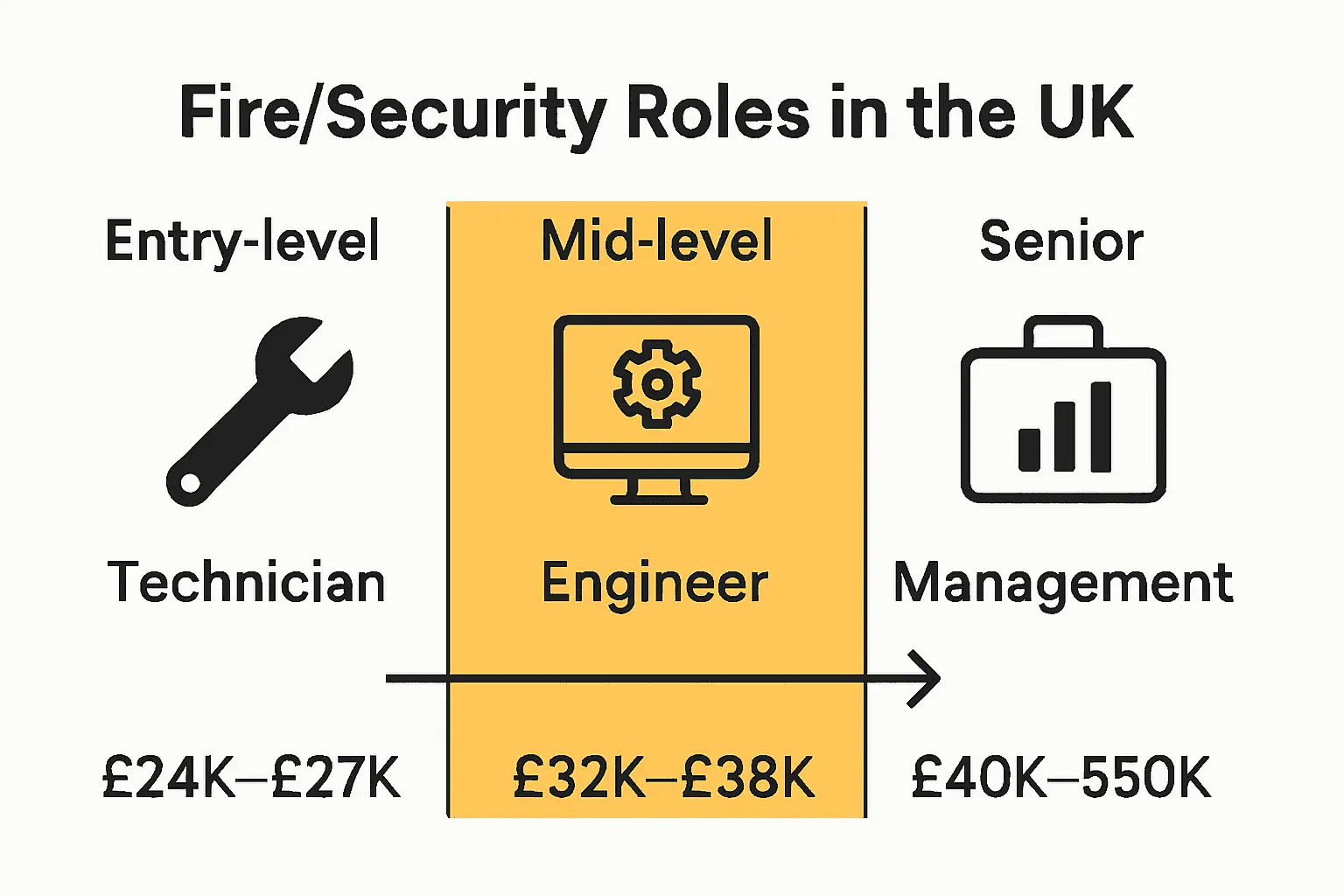
Indeed UK highlights the potential career progression in this industry, with typical roles and salary ranges including:
- Entry-Level Technician: £25,000 - £35,000
- Fire and Security Engineer: £35,000 - £45,000
- Installation and Commissioning Supervisor: £45,000 - £55,000
- Senior Security Management: £55,000 - £75,000
Career advancement typically follows a structured path that rewards continuous learning and specialization. Professionals can progress by:
- Acquiring advanced technical certifications
- Developing specialized expertise in specific security systems
- Pursuing management and leadership training
- Expanding technical knowledge across multiple security domains
- Building a reputation for reliability and innovative problem-solving
Beyond financial rewards, career progression in this sector offers intrinsic satisfaction through meaningful contributions to public safety, technological innovation, and community protection. Professionals who invest in ongoing education, maintain high ethical standards, and demonstrate adaptability will find numerous opportunities for personal and professional growth.
Learn more about crafting a successful security career with our comprehensive CV guide to maximize your potential in this dynamic industry.
Common Challenges And How To Overcome Them
Fire and security professionals encounter numerous complex challenges that require strategic thinking, continuous learning, and adaptable problem-solving skills. Navigating these obstacles is crucial for maintaining effectiveness and career longevity in this critical sector.
Capita’s experience underscores the importance of understanding project complexity, highlighting several key challenges professionals might face:
- Rapidly evolving technological landscapes
- Complex regulatory compliance requirements
- High-stakes decision-making environments
- Intense pressure during emergency responses
- Continuous skill upgradation needs
Professionals can strategically overcome these challenges by:
- Investing in continuous professional development
- Developing robust technical and interpersonal skills
- Maintaining flexibility and adaptability
- Building strong professional networks
- Staying updated with industry technological advancements
London Fire Brigade’s diverse responsibilities illustrate the multifaceted nature of fire and security work, emphasizing that success requires comprehensive training and exceptional resource management. Professionals must cultivate resilience, maintain calm under pressure, and demonstrate unwavering commitment to public safety.
Learn more about building a resilient security career with our comprehensive skills development guide to effectively navigate and excel in this demanding yet rewarding profession.
Take Control of Your Fire and Security Career Today
Breaking into the UK fire and security sector can feel overwhelming with its complex qualifications, strict regulatory standards, and the urgent need for up-to-date skills. You want to stand out in roles like Fire and Security Engineer, Emergency Response Technician, or Security System Designer but may struggle with where to start or how to advance effectively. The challenge is clear: develop your professional profile, access quality job opportunities, and keep pace with the evolving demands highlighted in our detailed UK career guide.
Discover how The Security Jobs Board can simplify your journey by offering a dedicated platform where you can quickly create a CV, set personalised job alerts, and connect directly with employers seeking your expertise. Whether you are just entering the field or aiming to progress towards senior positions, our site supports your ambitions with trusted job listings, speed, and GDPR-compliant security. Don’t let opportunities pass by. Visit The Security Jobs Board now and take your next step to build a secure, rewarding career in fire and security today.
Frequently Asked Questions
What types of roles are available in the fire and security sector?
The fire and security sector includes various roles such as fire safety engineers, security system designers, risk management consultants, emergency response technicians, and cybersecurity specialists, among others.
What qualifications do I need to pursue a career in fire and security?
Candidates typically need proven experience, strong diagnostic skills, excellent communication abilities, and familiarity with leading industry brands. Additional certifications in specific areas like CCTV installation or fire detection enhance employability.
How can I advance my career in the fire and security industry?
Career progression can be achieved by acquiring advanced technical certifications, developing expertise in specialized security systems, pursuing management training, and demonstrating reliability through continuous professional development.
What are the legal requirements for professionals in fire and security jobs?
Professionals must adhere to various legal standards, including health and safety regulations, fire safety laws, data protection acts, and licensing requirements from the Security Industry Authority (SIA). Continuous training and certification are often mandatory.


